
Hunt County court directs staff to load 3% pay increase into preliminary 2025–26 budget; requests to be prioritized
Get AI-powered insights, summaries, and transcripts
Subscribe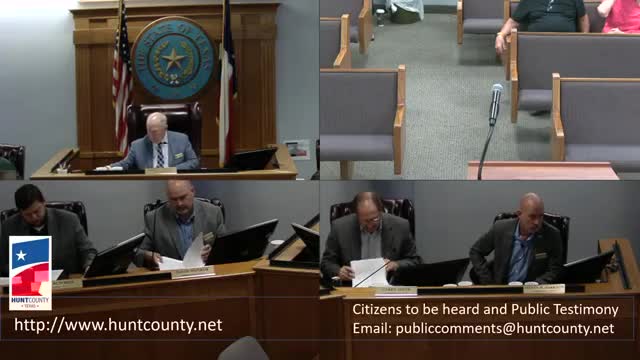
Summary
The Hunt County Commissioners Court on July 18 directed staff to include a 3% across‑the‑board pay adjustment in the preliminary fiscal 2025–26 budget and to load all departmental requests into a consolidated package for review.
HUNT COUNTY, Texas — The Hunt County Commissioners Court on July 18 directed staff to include a 3% pay increase in the preliminary fiscal 2025–26 budget and to load all department funding requests into a combined preliminary budget for review. The court set a target to have the consolidated preliminary numbers ready within about a week so commissioners can begin prioritizing before the county’s public filing deadlines in early August.
Why it matters: The 3% baseline gives staff and elected leaders a single starting figure for final budget cuts and tradeoffs. Commissioners repeatedly described law‑enforcement staffing, the public‑health inspector vacancy, senior services and the AMR emergency‑service contract as among the highest priorities to weigh against limited county revenue.
During the special session Judge Stovall, who presided, and the three commissioners present discussed an array of separate department requests — raises and new positions submitted by the sheriff’s office, the district attorney’s office, the health department, veterans services and others. The court agreed to enter the 3% figure into the budget tool and to assemble the requested new positions and supplemental requests into a separate worksheet the court can add into or subtract from the core budget for modeling. “Let’s load in initially at 3%,” one commissioner summarized as the working baseline.
County staff said most departmental requests have now been submitted and that the county should have a near‑complete preliminary budget for internal review by the end of next week. Commissioners noted that several large obligations remain uncertain, including the county’s final certified tax roll (expected by the tax office next week) and the final figures for items such as a county hazard‑mitigation plan and the new AMR contract, all of which affect the final tax‑rate and spending choices.
Court members also discussed how to present the public version of the budget. One commissioner said he preferred filing a preliminary budget that reflected the higher ‘‘top’’ number so the court could then identify cuts from a prioritized list rather than present a lower number and later add large sums.
The court made no final appropriations at the session. The only formal vote recorded was to adjourn at 10:14 a.m.; other budget directions were recorded as guidance to staff and not formal approvals. Staff said they will provide both the departments’ requested figures and the court’s budgetary totals when the preliminary package is ready.
Looking ahead: Commissioners asked staff to return a consolidated package showing the requested additions (new positions, raises and contract increases) and a second worksheet that adds those requested items to the baseline budget that includes the 3% pay cost. The court plans to use those documents to prioritize staffing and one‑time needs before finalizing recommended budget figures to publish for the public.