
Boone County weighs higher fee, liability and contract term in Belvidere IT services IGA
Get AI-powered insights, summaries, and transcripts
Subscribe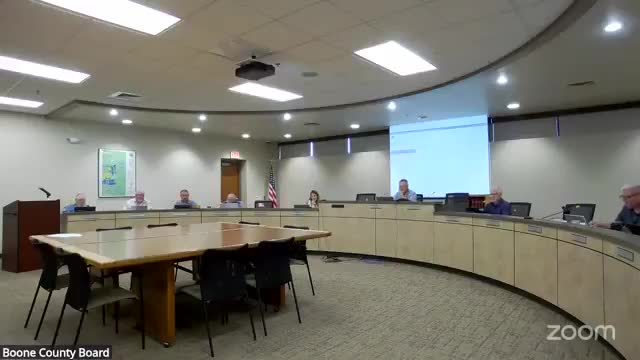
Summary
Boone County officials discussed proposed changes July 17 to the intergovernmental IT services agreement with the city of Belvidere, including a staff‑recommended flat annual fee of $120,000, concerns about breach liability and a suggested October effective date.
Boone County officials discussed proposed changes July 17 to the intergovernmental agreement (IGA) that governs information technology services the county provides to the city of Belvidere, including a staff‑recommended flat annual fee of $120,000 and questions about liability and contract length.
County staff presented the proposed IGA amendment as a move away from paying for a percentage of an individual employee’s salary toward a single annual fee that captures salary and benefits plus behind‑the‑scenes services. "So that's how we came up with the 120,000," said Becky Stoneman, who introduced the proposal and asked the board for input before taking the figure to the city.
Lieutenant Kevin Smythe, who described several years of discussions with county IT leadership, said the change would bring the city’s payment closer to what the county already charges other entities. "This is really just bringing them in line with what we are charging other entities," Smythe said, noting the figure remains below some existing contracts the county holds. Smythe and staff described the $120,000 as intended to cover salary, benefits and other operating costs, and they said the figure includes pension and health insurance for the county employee assigned to city work.
Board members raised several concerns during the lengthy discussion. Several members said the proposed fee may be low given the county’s responsibility for data storage, off‑site backups, cybersecurity training and overall liability if the city suffers a breach. One board member said the city has historically been a high user of county IT services; others said existing ticketing and time‑tracking systems undercount actual usage because staff often respond by phone or email without creating a formal ticket.
Legal counsel Carla said the county reviewed the agreement’s form and had no objections to the contract language as presented, but members asked counsel about liability and indemnity. Board counsel observed that liability could arise in some hacking scenarios and that a hold‑harmless provision or a limitation‑of‑liability clause might be appropriate, but she warned the county could not necessarily expect the city to accept a hold‑harmless for actions taken by county employees.
Members urged modifications before finalizing the arrangement: shorten the contract term to two or three years for review, clarify whether pension and other long‑term liabilities are covered in the fee, and decide the effective date for the new payments. Several members said the new billing should begin in October rather than immediately, in part because the city already paid the May installment under the old contract. One board member asked county staff and Commissioner Josh Shoemaker to work together to gather more detailed cost data and provide a recommendation; Shoemaker said the $120,000 “is in the ballpark” but likely on the low end and asked to meet with staff for further analysis.
No formal vote was taken; the board indicated consensus that the new agreement should begin in October and asked staff to refine contract language, verify the fee covers pension and benefits, and return a draft for a final decision at the July 31 board meeting. Legal counsel and IT staff were asked to consider indemnity language and options to bill for significant incident response hours above an agreed threshold.
Background and other details mentioned in the discussion: the county currently provides on‑site and off‑site backups and uses a cybersecurity training platform (KnowBe4) purchased through a grant; some services and shared software are already billed on a cost‑share basis; ticketing undercounts informal support; and the county has an existing separate contract to provide IT support to its 9‑1‑1 board. Several commissioners recommended a short contract that can be revisited if actual costs or liability concerns change.