
PLDRC approves variance for 768-square-foot pole barn on rural-ag parcel citing driveway and flooding concerns
Get AI-powered insights, summaries, and transcripts
Subscribe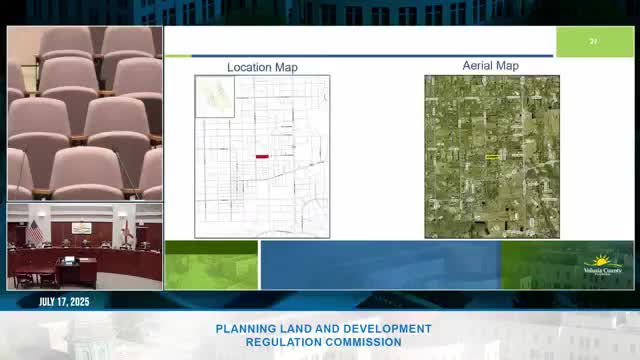
Summary
The commission granted a variance to place a 768-square-foot pole barn 10 feet from the southern property line on a 2.31-acre rural-ag parcel, accepting applicant testimony about a flood-prone backyard and existing shell driveway.
The Planning and Land Development Regulation Commission approved a variance allowing a proposed 768-square-foot pole barn to be sited 10 feet from the southern property line on rural agricultural (RA) property, subject to two staff conditions.
Staff presenter Mr. Harris said the applicant requested to reduce the southern side yard from 25 feet to 10 feet for the proposed accessory structure. He told the commission the property is 2.31 acres with an existing unpermitted 830-square-foot pole barn constructed in 2010, and a recently permitted 160-square-foot pergola (per staff notes). Harris said RA zoning requires accessory structures over 500 square feet to meet principal structure setbacks and that staff recommended denial because the request failed to meet three of five criteria; staff provided two conditions should the commission find the criteria met.
The applicant said the pole barn would function as a carport to reduce walking distance for an older occupant and that the backyard floods, so placing the structure elsewhere would require hauling gravel and elevating ground. The applicant also noted an existing gravel driveway adjacent to the proposed location.
During questioning, Commissioner Croft asked whether the structure would be open on the sides; the applicant confirmed it was an open pole barn. Commissioner Bush asked whether neighbors objected; the applicant said the adjacent neighbor was fine with the location. Member Shelley moved approval subject to two staff conditions; Member Costa seconded. The motion passed unanimously.
Staff noted the unpermitted existing pole barn meets setbacks and must be permitted or could be subject to code enforcement; the newly approved variance applies only to the proposed structure and does not legalize unpermitted buildings.