Get Full Government Meeting Transcripts, Videos, & Alerts Forever!
Get email alerts on the Tax Increment Financing topic
No spam. Unsubscribe anytime.
Resident and supervisors clash over county guidance on tax-increment financing
Summary
A public commenter urged the board not to support a committee TIF resolution and called for stricter repayment limits; supervisors debated whether the proposed county guidance requires stronger standards or would hinder economic development. No final vote was recorded in the transcript.
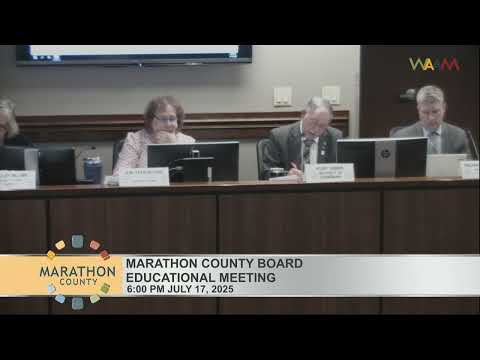
A Marathon County resident and several county supervisors debated guidance for local use of tax-increment financing, or TIF, during the July 17 county board meeting as the board considered Resolution 36-25 on how county representatives should evaluate future proposed tax incremental districts. Peter Weinshank, a resident of Edgar, told the board the version sent by the Extension Education and Economic Development Committee was “status quo” and urged supervisors not to support it; he asked the board instead to amend the resolution or refer it to the Human Resources, Finance and Property Committee. Weinshank said the committee’s draft “fails to mandate that the joint review board follow 10 Department of Revenue recommended best practices” and “fails to tell a joint review board to calculate taxpayer repayment when setting the lifespan of a new tax incremental district.” He proposed that all new districts repay taxpayers within 38 years and said Marathon County had about $1.4 billion in TIF property in 2024, representing 12% of city and village property value in the county. Why it matters: advocates for reform said lax TIF oversight can push tax burdens onto residents and extend district lifespans; defenders said TIFs are often necessary to attract development that would not otherwise occur and can reduce general-fund spending on infrastructure. At the meeting Supervisor Sam Fiffrick argued that joint review boards evaluate whether “development would not happen but for the financial support of TIF,” saying successful TIFs can prevent blight and finance infrastructure instead of general-fund dollars. By contrast, Supervisor Red Rosenberg said the resolution had been “hollowed out” from task-force recommendations and would not shorten district lifespans or require the 10 DOR standards; he said he would seek amendments to require a 38-year payoff and mandatory adoption of the DOR best practices. County Administrator Leonard answered a technical question about what happens when a district closes, saying state statute governs apportionment and that when a district closes the additional taxable valuation behaves similar to net new construction in spreading its effect across the tax base. The transcript does not record a formal vote on Resolution 36-25. Discussion vs. decision: the meeting record shows public comment and supervisory debate but no recorded motion or vote on the resolution in the provided transcript. Several supervisors asked for stronger mandatory criteria and shorter repayment horizons; others emphasized TIF’s role in enabling projects that would not occur without public support. Context and next steps: the resolution originated from the Extension Education and Economic Development Committee and was on the board’s agenda as item 9B2A. Supervisors proposed possible amendments (mandatory DOR best practices; 38-year repayment limit) but no outcome was recorded in the transcript. If the board advances any amendments or takes a formal vote, that action would be reflected in a later meeting record.