Get Full Government Meeting Transcripts, Videos, & Alerts Forever!
Get email alerts on the Transportation.bicycle Safety topic
No spam. Unsubscribe anytime.
What the 'Idaho stop' law does and what cyclists must do
Summary
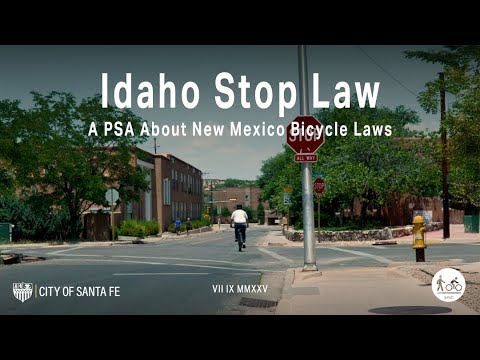
A presenter explained that the 'Idaho stop' allows bicyclists to treat stop signs as yield signs and red lights as stop signs, outlined rider responsibilities, cited safety data from Idaho and Delaware, and referenced the National Highway Traffic Safety Administration's assessment.
A presenter (staff member) explained how the so-called "Idaho stop" law changes bicyclist duties at intersections and summarized safety data and agency guidance.
The presenter said the Idaho stop is "a statewide law . . . that allows bicyclists to treat stop signs as yield signs and red lights as stop signs," and described the specific responsibilities it creates for riders.
Under the law as described in the presentation, at a stop sign a bicyclist must "confirm that there is no other traffic, including pedestrian traffic, that must be yielded to before rolling through the stop sign." If other traffic must be yielded to, the bicyclist must come to a complete stop and yield. At a red light, a bicyclist must "come to a complete stop and then confirm that there is no other traffic that must be yielded to before proceeding through the intersection." The presenter emphasized that the obligations include yielding to pedestrians.
The presenter outlined several potential benefits, saying the law can allow bicyclists to maintain momentum through stop-sign-controlled intersections, avoid turning conflicts with motorists at signalized intersections, increase distance between bicycles and motor vehicles and thus reduce the likelihood of crashes, and eliminate the need for motor vehicles to follow slower-moving bicycles through an intersection once a light turns green.
The presentation cited adoption and safety data: "12 states have adopted laws similar to the Idaho stop," the presenter said, and cited a 14.5 percent drop in bike injuries in Idaho and a 23 percent decrease in injuries at stop-sign intersections in Delaware. The presenter also cited the National Highway Traffic Safety Administration as saying such laws "improve cyclist safety, visibility, and even help the environment."
The transcript contains no record of a motion, vote, or formal action to adopt or change law. The remarks in the transcript are explanatory and informational rather than a record of deliberation or a policy decision.