Get Full Government Meeting Transcripts, Videos, & Alerts Forever!
Get email alerts on the Vfx Documentary Production topic
No spam. Unsubscribe anytime.
Documentary camp presenters explain VFX workflows, tools and time costs
Summary
VFX artists at a documentary camp described 3D workflows, use of Blender and motion capture, and the time and computing costs of rendering realistic shots for documentary sequences.
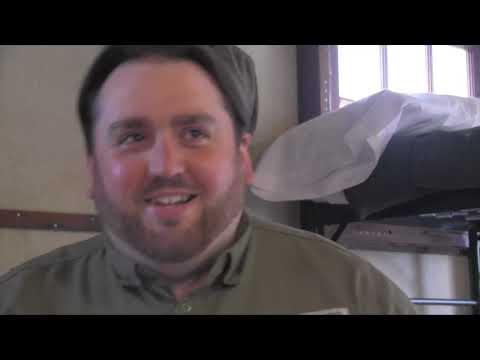
At a documentary camp session, VFX artists described the technical steps and time involved in producing visual-effects shots for documentary films and explained choices about stylized versus photoreal imagery. Kincaid Fiscus, identified in the recording as a VFX artist at the camp, explained the multi-stage process of creating a 10-second shot: photo scanning a location, modeling, texturing and rendering in software such as Blender.
Fiscus described texturing and rendering as labor- and compute-intensive: "Just to get a single 10 second shot, it can sometimes take up to 3 weeks of work and rendering," he said. He also said Blender is free and widely used, and described motion-capture workflows used to preserve an actor's performance before applying digital effects. Neil, introduced as "the head VFX artist here at MCAT," discussed stylistic choices and said, in part, "Everything should be CGI in movies," reflecting a hyperbolic comment about preferences for digital methods.
The presenters cited an industry example about rendering cost and time for a highly technical film sequence: they noted that frames of the black hole in Interstellar took about 100 hours each to render, which the speakers used to illustrate how compute time grows with scene complexity. The session discussed common production pressures, including tight studio schedules that can shorten artists' available time, and described practical techniques (VHS capture for a specific aesthetic) used in documentary production. No industry agreements or policy decisions were announced during the presentation.