
Planning commission approves rezoning for proposed John Deere dealer on State Road 109
Get AI-powered insights, summaries, and transcripts
Subscribe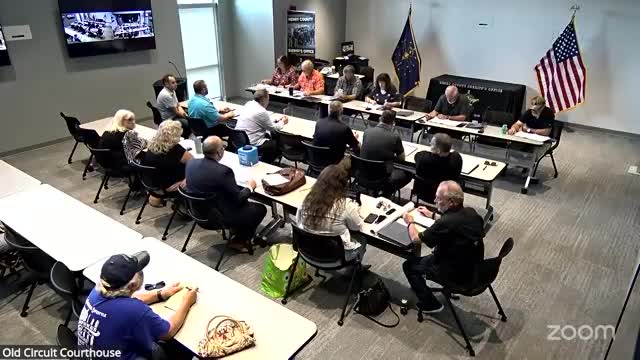
Summary
The Knightstown Planning Commission unanimously voted to rezone a parcel on State Road 109 from light industrial to highway business to allow a proposed John Deere dealership and service center.
The Knightstown Planning Commission unanimously voted to rezone a parcel on State Road 109 from light industrial to highway business to accommodate a proposed John Deere dealership and service center. The commission approved the rezoning for case number 2280 after a public hearing and discussion.
The rezoning matter matters to neighbors because it changes the types of outdoor uses permitted on roughly a 21–25 acre site and could allow more visible retail and service functions than the previous industrial designation. The petitioner, represented by Aaron Koenig and consultants, said the site will combine two existing facilities into a single dealership, bring employees and training capacity to Knightstown and require limited exterior changes.
Petition representatives described the business and the planned use. Aaron Koenig, president and CEO of Koenig, said, “We are fourth‑generation family owned and operated” and that the company expects to consolidate about 50 employees from two locations into the Knightstown site. Chris Cooper of Core Consulting described the building as “already built out” and requiring relatively modest exterior improvements, and Larry Bergman said he helped prepare the site plan.
Supporters and opponents spoke during public comment. Corey Murphy of the Newcastle Henry County Economic Development Corporation said, “I think this would be a fantastic reuse of this building,” calling the proposed use less intensive than some alternatives. Resident Gala Taylor, who lives across the road, told commissioners she initially feared a trucking depot but said on social media she was pleased to learn the project would be a John Deere location and added, “Welcome to the neighborhood.”
Opposition centered on property values, outdoor uses and long‑term uncertainty. Resident Jeff Evans, who lives directly across the street from the Paddock building, asked for a clear explanation of what the highway business zoning allows and said, “The big concern is, are we making another mistake upping the zoning for bigger business to come in here where that was a failure.” Commissioners and staff responded with background on the parcel’s zoning history: the parcel had been rezoned from agricultural to highway business earlier, was rezoned to light industrial in 2012, and the current proposal would return it to its earlier highway business designation.
Koenig and his team detailed operations and mitigation measures. Koenig said the interior use will include two retail spaces (one for equipment and one for parts), a service area and parts storage, and that the business will run typical hours of 8 a.m. to 5 p.m. weekdays and 8 a.m. to noon Saturdays with seasonal extensions. He said the company plans about 25–30 technicians overall, with roughly 50 employees moving to the site at opening and potential growth to about 65 employees over time. On truck activity he estimated “2 to 10” trucks on a typical business day for deliveries and said most customers will bring equipment in by driving it on site.
On site appearance and community impacts, Koenig said the company will use earth‑tone colors and maintain the property, and that John Deere facility standards influence site upkeep. He said the company volunteered to add a landscape mound between the display area and the road to soften the view and that security lighting would be directed downward toward the equipment. He added the company plans to install two 5‑ton overhead cranes inside the building for safe servicing and to use the facility as a regional training hub for its 15 locations.
Commissioners asked questions about permitted uses under both zoning categories and the risk that a future tenant could use the site for a different, more intensive business. A planning staff member noted that the commission packet highlighted uses permitted without additional commission approval under both light industrial and highway business zoning, and the staff explanation clarified that the zoning applies to the entire parcel. The petitioner acknowledged the risk and said the proposed highway business zoning was acceptable to them even though they would prefer to remain industrial.
On procedure, petitioner representatives said they had a pending purchase contract with a timing constraint. They asked whether the commission of county/city commissioners could act within seven days rather than the standard ten‑day notice to permit final use approval to proceed within their contract window. The planning commission attorney present said he would discuss the calendar with the commissioners and get back to the petitioner; staff also noted the commission’s separate final use approval process and the 10‑day timing expectation.
The commission’s rezoning vote was taken by roll call and approved unanimously. Jason Roberts seconded the motion; the mover was not identified on the record. The commission recorded the vote as unanimous in favor of rezoning. The rezoning is a change to the zoning map; a separate final use approval before the commission is required for specific site development and operations.
Next steps: the petitioner will await confirmation from the planning commission attorney and staff on whether the final use approval can be placed on an earlier commissioners’ agenda to meet the timing needs of the purchase contract. No permit or site‑plan approvals were granted at the rezoning vote; those will be considered separately as required by local procedures.
Details and clarifications from the hearing: - Site area discussed: described by petitioner as “just over 25” and elsewhere as about 21 acres in the hearing; the size was discussed during the public Q&A and was not specified to a single exact figure in the record. - Employee counts: petitioner said just under 50 current employees from the two combined locations would move initially and that the site could grow to about 65 employees over time. - Typical truck deliveries: petitioner estimated 2–10 delivery trucks on a typical day; customers may bring equipment on trailers or drive larger machines on site. - Hours: petitioner said typical hours would be 8 a.m.–5 p.m. weekdays and 8 a.m.–noon Saturdays, with seasonal hour extensions.
The meeting record shows the rezone for case 2280 passed unanimously; final development approvals remain subject to the commission’s separate procedures.