Get Full Government Meeting Transcripts, Videos, & Alerts Forever!
Get email alerts on the Zoning Parking Minimums topic
No spam. Unsubscribe anytime.
Residents press Salem council to remove parking minimums; council refers zoning change to planning board
Summary
Public commenters urged the council to eliminate minimum parking requirements for new multifamily housing; council referred an ordinance amending parking minimums to the Planning Board for a joint public hearing.
Three residents spoke during public testimony on July 17 urging Salem officials to remove minimum parking requirements for new multifamily housing and pursue infill development. The City Council then referred a proposed zoning amendment on parking minimums to the Planning Board for a joint public hearing.
Caitlin Halapa, a resident of Ward 5, told the council that minimum parking laws ‘‘contribute to both our housing and climate crises’’ and criticized the city’s ordinance requiring ‘‘1.5 spaces per unit’’ for new multifamily developments. She said developers can seek variances, but the variance process ‘‘adds time, cost and favors large developers.’’
Lydia King, another resident, said that in one large complex she lived in, ‘‘about 40% of that building’s parking units were sitting empty overnight,’’ and described how some landlords number and charge for parking spots, limiting short-term use by visiting care aides.
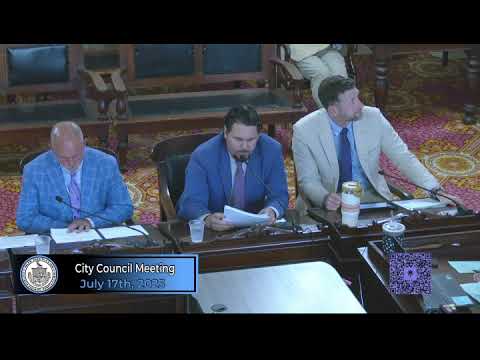
Councilor Hathworth moved to refer the zoning amendment to the Planning Board for a joint public hearing; the motion carried. Councilors say the referral begins a longer public process on parking reform in Salem.
Councilors and staff framed the referral as the start of a ‘‘relatively long public process’’ to consider changes that could reduce paved surfaces, improve stormwater outcomes and increase housing capacity. Councilors encouraged residents to review background materials and noted a planned public hearing where more detailed analysis and public comments will be taken.
The referral does not change current requirements; it initiates the zoning and public-review process.