Get Full Government Meeting Transcripts, Videos, & Alerts Forever!
Get email alerts on the Water Infrastructure History topic
No spam. Unsubscribe anytime.
Roosevelt Dam, SRP and CAP shaped Phoenix's modern water network, volunteer training notes
Summary
In a recorded volunteer-training lesson, Laura Van Lyth traced Phoenix's water infrastructure from indigenous canals through the Salt River Project, Roosevelt Dam (1911), the Verde Water Treatment Plant (1949) and the Central Arizona Project (1980). She also discussed the doctrine of prior appropriation.
In a training session for Phoenix Water Wrangler volunteers, Laura Van Lyth, volunteer coordinator and water resource specialist for the City of Phoenix, reviewed the history of water infrastructure in the Salt River Valley and across Arizona. She said Indigenous Pima and Maricopa peoples "made the earliest canals" that provided the template for later systems, and that settlers arrived in the Salt River Valley around 1869.
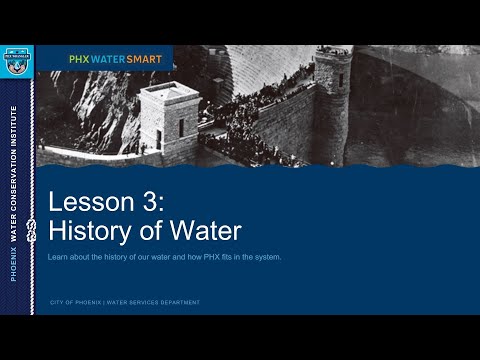
Van Lyth described how the National Reclamation Act encouraged settlement and large-scale irrigation that funded dams in the Salt River chain of lakes. She cited the Roosevelt Dam, noting a historic photo from its creation in 1911, and said other dams created Apache, Canyon and Saguaro lakes.
The session also covered the Salt River Project and early canals: Van Lyth said the first official SRP canal was completed in 1868. She discussed the Verde Water Treatment Plant, which the trainer said began operations in 1949, and noted that Phoenix currently operates five active water treatment plants.
The presentation placed the Central Arizona Project in that timeline; Van Lyth said CAP was built in 1980 and "carries all of our Colorado River water." She also explained the U.S. Bureau of Reclamation's role in managing reservoirs and dam releases.
Van Lyth mentioned the doctrine of prior appropriation as the legal framework in the region, saying it is essentially "first come first serve" and that it historically excluded Indigenous communities because of how rights were claimed. The training did not record any policy changes; the segment was informational.