
Glendora Junior All American reports growth, fundraising and safety steps as season approaches
Get AI-powered insights, summaries, and transcripts
Subscribe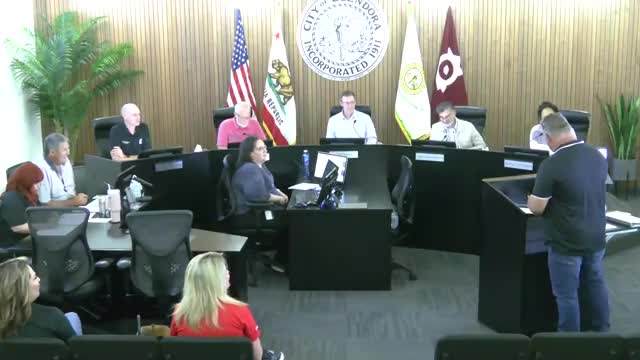
Summary
Leaders of the Glendora Junior All American football and cheer program told the Parks and Recreation Commission the program has grown in participants and fundraising, detailed revenues and expenses for the season, and described safety, academic and league rules ahead of the August season start.
Jeff Higgins, president of the Glendora Junior All American football and cheer program, told the Parks and Recreation Commission on July 22 that the program has expanded participation and revenue streams as it prepares for the 2025 season. Callen Vanios, the program's cheer coordinator, described a rise in cheer participation, competitive results and new safety equipment purchases. The report matters because the commission oversees youth recreation use of city facilities and the program draws players from Glendora and neighboring cities, affecting field scheduling, public safety checks and community recreation planning. Higgins said the league runs a primary season from July through November with spring camps and 7-on-7 and 5-on-5 events. He outlined divisions by age and typical roster caps: flag (ages 5–6) is capped at 20 players, first-year tackle divisions are capped at 25, and older divisions cap around 33 players. He said registration opens in March and has filled quickly in recent years; his board maintains waiting lists when rosters reach capacity. Higgins provided a budget overview, saying roughly $94,000 comes from registration fees; sponsorships bring $25,000–$30,000; snack bar revenue near $50,000; fundraisers $25,000–$30,000; and camps/hosting/playoff events about $45,000. He said league fees are about $20,000 and football and cheer equipment expenditures total roughly $110,000 per season. The board uses revenues to buy uniforms, maintain or replace equipment and pay league fees. On safety and oversight, Higgins said all board members and coaches must be badged and undergo a background check through the police department before being on the field. He said Junior All American will move to an unlimited-weight classification next year, eliminating weigh-ins for players; he framed that as a conference rule change. Vanios said the cheer program has grown to 73 girls this year from 43 last year. She described competitive activity (two conference competitions, JAMS national qualifiers in Anaheim, and a subsequent trip to Las Vegas where teams placed in the top 10) and said the program purchased two additional practice mats to improve safety for tumbling and stunting on turf. Commissioners asked about roster caps, multi-team entries, and whether local address determines which league branch a child must join. Higgins said multi-team entries per division are permitted by the conference and that residency rules apply: players are expected to play for their home branch unless a cut-release contract is provided from the other city's president. On cross-city play, he estimated 20–25 cut contracts this year from Covina. Commissioners also asked about scholarship help. Higgins described a program that covers registration and spirit packs for some participants; Vanios described a “Be the Best” scholar fund that uses 10% of sponsorship proceeds to subsidize children who cannot afford fees; the program approved four sponsored players this year. The report included a request to preserve and increase access to practice and game fields; Higgins said the program would like more reserved practice time and to return occasional games to Glendora High School’s CIF field. "We take that money and put it back into the program — buying new equipment, new uniforms," Higgins said. "We want these kids to be able to play the sport and have a great time." Vanios added, "These girls are really amazing — they're holding girls the same age and size in stunts. We want them to be safe and to compete." The commission did not take formal action on the presentation. Commissioners offered congratulations and encouragement and noted the league's opening ceremony is scheduled for August 16. Looking ahead, the program said playoffs typically run through November with quarterfinals in early November and semifinals the following week; commissioners asked staff to consider field scheduling and facility needs if teams continue to expand.