Get Full Government Meeting Transcripts, Videos, & Alerts Forever!
Get email alerts on the Water Wastewater Bonds topic
No spam. Unsubscribe anytime.
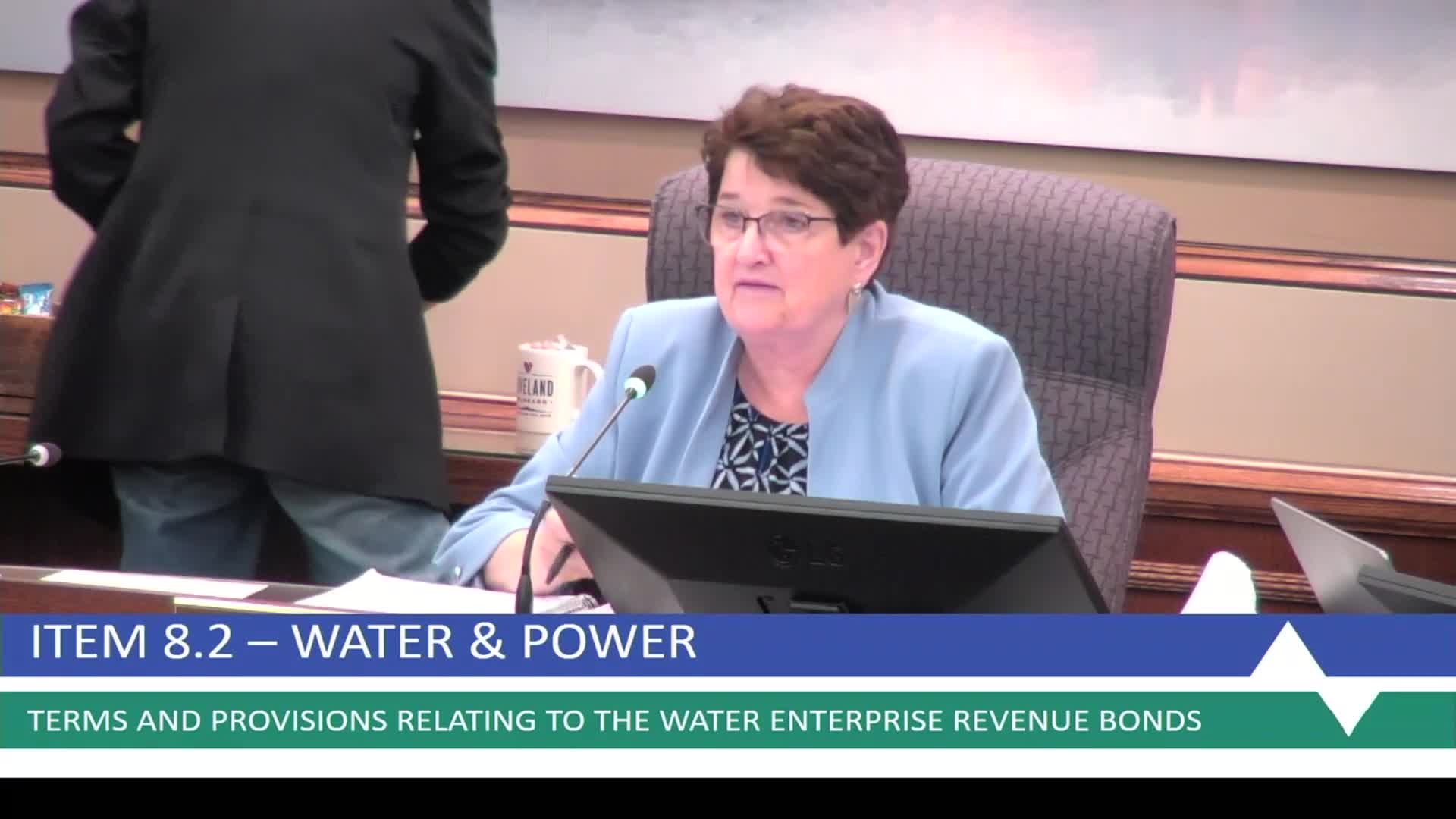
Council approves water/wastewater revenue bonds and two city property purchases to consolidate utility and operations space
Summary
Loveland City Council authorized water- and wastewater-enterprise revenue bonds and approved two property purchases to provide city utilities and operations with consolidated space, voting to move ahead with financing and acquisitions while asking staff for clearer written funding details.
Loveland —City Council voted Tuesday to authorize water- and wastewater-enterprise revenue bonds and to approve two property purchases intended to house city utility and operations staff.
Council approved four bond ordinances that staff said will fund projects in the Water and Wastewater enterprises, and then approved two budget appropriations to buy property: a 6,000-square-foot retail/office unit at the Loveland Yards (proposed to be paid with capital expansion fees) and a larger 89,000-square-foot campus at 1515–1615 Cascade Avenue proposed for acquisition by Water & Power and other departments.
Why it matters: Staff told council that utility administrative and operations space is overcrowded, that several departments pay high private-sector rents and that acquiring space now is less costly than building new facilities later. City staff also described a plan to use enterprise impact fees and bonds to acquire and adapt the campuses and to reduce long-term leasing costs.
Bond ordinances and legal questions
Council adopted four bond ordinances (series 2025) authorizing issuance of Water Enterprise and Wastewater Enterprise revenue bonds. The ordinances passed by 7-2 roll-call votes on the second readings. City legal staff and outside bond counsel said the financing uses the enterprise exception under the Colorado constitutional Taxpayer's Bill of Rights (TABOR): enterprises funded by user fees can issue revenue bonds secured by enterprise revenues without requiring a voter authorization that TABOR ordinarily requires for tax or district debt. Two council members asked for clearer written explanations; the city attorney said the approach is standard across Colorado and the city would defend the structure if challenged.
Property purchases and how they will be funded
- Loveland Yards Unit (5801 McWhinney Blvd, Unit C): council approved on first reading a supplemental appropriation to buy a roughly 6,000-square-foot unit for about $1.2 million. The proposed funding source is capital expansion fees (50% general-government CEFs, 50% library CEFs). Staff warned there would be ongoing operations and maintenance costs (estimated about $36,000 per year) to be absorbed by the general fund while the facility is used as an East-side service point.
- Cascade / Group Publishing campus (1515 & 1615 Cascade Ave): council approved on first reading a supplemental appropriation to acquire the larger campus for about $12 million (about $100 per square foot). Water & Power staff said the campus provides immediate space for administration and technical staff now paying private rents and would avoid a larger, estimated $40 million expansion the utility had previously scoped. Staff said existing tenants on the Cascade campus would remain under lease during transition and that the property includes usable office furniture and equipment.
Public comment and concerns
Public speakers and commentators asked for detailed documentation about funding sources and pressed the council to explain whether the city was effectively removing taxable commercial property from local tax rolls. A resident raised TABOR-based legal concerns about using enterprise bonds for facilities; the city attorney and outside counsel responded that the enterprise exception applies and cited the practice across other Colorado municipalities. Speakers also asked how purchases would affect rates and whether buying commercial property reduces school and county property tax revenue.
Next steps
Council approved the financial ordinances and the first-read appropriations. Staff committed to return at the next readings with more detailed financing schedules and written clarifications about which funds would be used for acquisition, what portions of the projects the bond proceeds would cover, and how leasing savings would offset costs. The Cascade purchase was presented as a way to reduce long-term rent and to give utilities room to consolidate operations, but staff said details about moving existing tenants and implementation would be brought back to council.
Ending
Council's approvals move forward a plan to centralize several city functions, reduce private-sector rents and use enterprise financing where permissible under state law. Council members asked staff to provide clearer written explanations about funding flows, TABOR compliance and any effects on general-fund and school-district tax rolls ahead of final bond closings and final property closing.