
Will County board votes to drop 140th Street expansion from plan, then removes entire transportation report after heated debate
Get AI-powered insights, summaries, and transcripts
Subscribe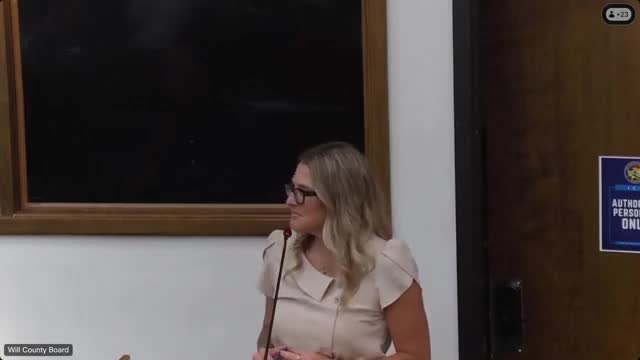
Summary
Facing sustained public opposition and intergovernmental questions, the Will County Board voted to remove the A Hundred 40 Third Street expansion from its transportation improvement plan and then — after extended debate about the plan's legal status — voted to remove the full program from the meeting agenda and leave reporting to staff.
Will County Board members on July 17 voted to take the A Hundred 40 Third Street expansion out of the county’s transportation improvement plan (TIP) after extended public comment from the village of Homer Glen, Homer Township and nearby residents. Later in the session the board voted to remove the entire transportation plan matter from the meeting agenda after legal staff clarified that the TIP is a required reporting document the county engineer files with Illinois Department of Transportation.
The decision and why it mattered Residents and local officials urged the board to stop or substantially scale back a proposed multi‑lane expansion of A Hundred 40 Third Street, a 3.5‑mile county project estimated in materials discussed at the meeting to cost tens of millions of dollars. Mayor Christina of Homer Glen told the board, “If this project was presented to you today … would you be willing to spend $70,000,000 on 3 and a half miles of road … knowing that an overwhelming majority of residents in Homer Glen time and time again ask you to please deny this expansion?” That question and similar testimony from Homer Township Supervisor Sue Stylin helped persuade a majority to remove the 140th Street item from the TIP.
But then a broader legal point changed the scope of what the board could do: Assistant State’s Attorney Sally Meyer told members the TIP is essentially a statutorily required report from the county engineer to IDOT, historically presented to the board as a courtesy. “The plan is supposed to be a report from the county engineer to IDOT as to what projects are pending in Will County,” Meyer told the board. She advised that removing an item from the board’s agenda does not, by itself, rescind previously approved project authorizations — only explicit board action to rescind a project would do that.
Board actions and votes - The board amended the TIP to remove the A Hundred 40 Third Street expansion from the published plan; that amendment passed on a recorded vote. - During debate the board voted to remove the entire TIP from the meeting agenda (i.e., not to take the board’s formal action on the document during this meeting). Members said they will still receive staff reports and can take future actions if they choose.
Public concerns cited Residents and municipal representatives argued the expansion would run through or next to residential neighborhoods, harm community character and introduce more truck traffic and noise; they said local comprehensive plans and new commercial corridors should be favored instead. Opponents pointed to past traffic studies and later traffic counts showing that A Hundred 40 Third Street volumes did not meet thresholds cited in older county plans for a larger cross section. Supporters of the project said safety and forward planning justified the county’s planning process and noted federal funds and engineering work already invested.
Details and context - Cost and scope: Speakers referenced a $70 million construction figure for the expansion; staff said project funding in the TIP was tied to existing programming and federal/state matching rules. - Traffic counts: One public commenter cited the county’s own December 2023 study showing average daily traffic near 14,261 vehicles in a corridor where a higher volume is typically used to justify a four‑ or five‑lane cross section. - Process: Assistant state’s attorney reminded members the LaSalle factors and land‑use due‑process rules apply when the board considers land‑use or similar quasi‑judicial items; she also warned members not to treat materials from outside the public hearing as part of the record.
What’s next Board members asked staff to continue meeting with town and village officials and to return with further information. Several members said they want closer, earlier intergovernmental coordination on long‑range projects so residents, municipal plans and county programming can be reconciled before major studies and right‑of‑way acquisition begin. The TIP itself will be submitted by the county engineer to IDOT as required; the board’s decision to remove it from the agenda means the board did not take formal action on the document at this meeting, and any rescission of specific projects would require an explicit later vote.