
District unveils first annual dashboard showing mixed results on reading, math and attendance
Get AI-powered insights, summaries, and transcripts
Subscribe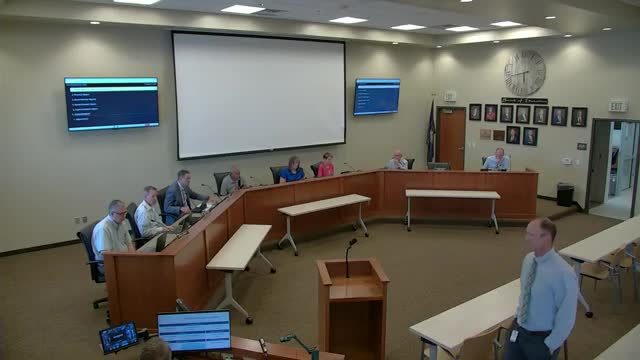
Summary
District staff presented the first annual district dashboard with key performance indicators: third-grade reading at 78.3% at/above benchmark, eighth-grade math at 62% (RISE), graduation rate at 95%, and chronic absenteeism at 16.8%; staff said some measures will be refined and linked to school pages later this year.
District staff presented the first annual district dashboard on July 17, showing summaries of learning, relationships and systems-of-support indicators the district said it will publish publicly and update annually.
Jeremy, the district’s director of assessment and data, described the dashboard as a curated set of key performance indicators tied to the strategic plan. "We're at 78.3 at the end of this past year," he said of the percentage of third-graders at or above the Acadience benchmark. He said the district used Acadience for third-grade reading because it provides a K–3 screening across the year and can indicate readiness for the next grade.
Jeremy said eighth-grade math is represented on the dashboard by RISE scores and that the district placed that indicator at about 62 percent, but he cautioned that RISE has limitations as a single-year snapshot. He noted a perceived disconnect between that figure and the district’s graduation rate: "that varies a little bit over the years, but right next to it is graduation rate of 95 percent," he said, pointing out differences between assessment measures.
On relationships, the dashboard shows chronic absenteeism of 16.8 percent for 2025, defined in the presentation as students missing more than 10 percent of enrolled days (about 18 or more school days across a full year). Jeremy and the superintendent said the district is working to disaggregate the chronic-absence data into subgroups so interventions can differ for students who are absent yet performing well and those who are absent and failing.
The dashboard also lists educator retention at 89 percent (teachers continuing with the district year-to-year), policy work (20 new policies, seven reviewed, 16 revised) and 39 district stakeholder committees. Jeremy said several dashboard items are placeholders while staff develop survey methodology; for example, parent satisfaction will be added after a planned parent survey using a statistically valid approach developed with Utah State University.
Board members asked for the ability to drill down to individual schools and grades; staff said they plan to add links to school-level pages when state data are published, likely in September. Jeremy said some district systems provide near-real-time data for operational use, and the public dashboard is intended as an annual, public-facing summary.
Staff committed to provide more detailed cohort numbers where board members requested them; for example, Jeremy said the senior cohort was "about" 1,800 and agreed to supply exact counts for graduation-rate context. The presentation concluded with board support for linking the dashboard on the district website and returning to the board for further refinements after state data are released.