Get Full Government Meeting Transcripts, Videos, & Alerts Forever!
Get email alerts on the State Budget Special Session topic
No spam. Unsubscribe anytime.
City officials warn of possible special session and large state budget shortfalls; Medicaid, SNAP cuts could shift costs to counties
Summary
Denver lobbyists and city legislative staff briefed the committee on the 2025 state session, a likely special session, and budget pressures including a near‑term shortfall and federal changes that reduce state revenue and increase county obligations for SNAP and Medicaid.
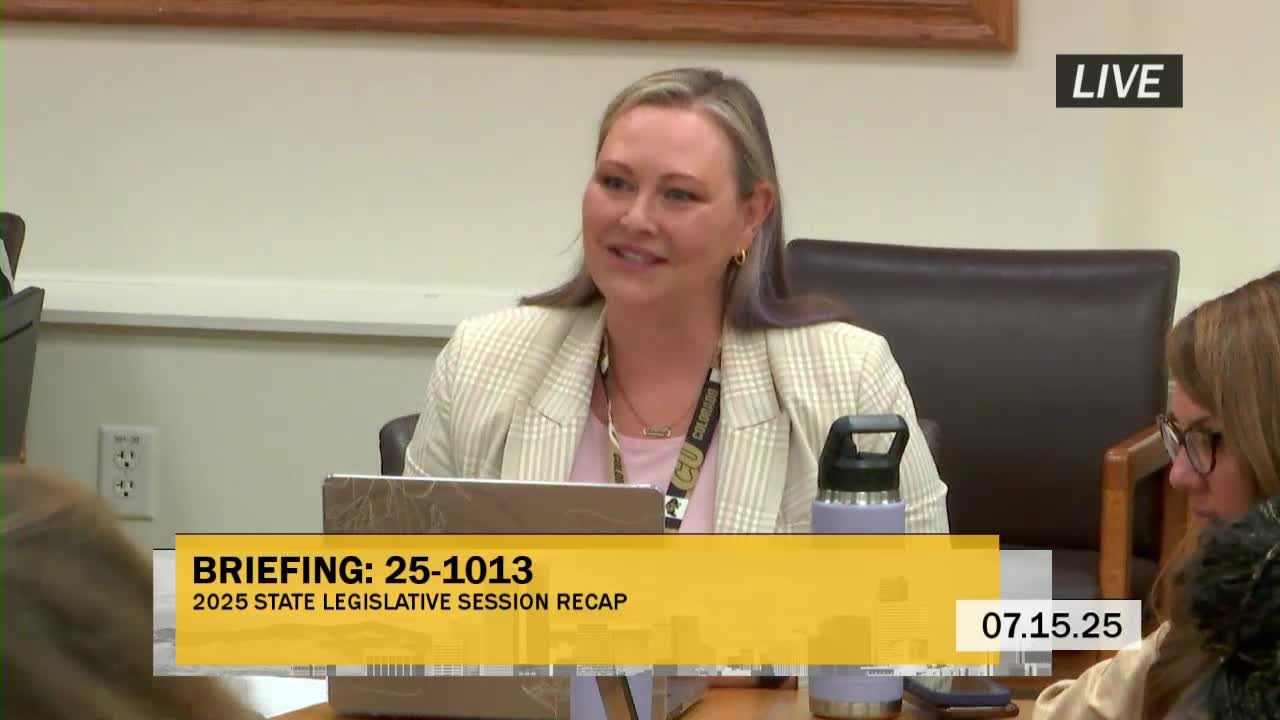
Denver legislative staff and the city’s lobbying team told the Finance and Governance Committee on July 15 that a special session of the Colorado General Assembly is likely and that the state is facing substantial budget pressure that could shift new costs to counties and cities.
Adam Paul of the mayor’s legislative team and BBK lobbyist Molly Steineman led a briefing that framed the special session as a moving target likely to consider federal‑driven issues, including changes to SNAP (food assistance), potential Medicaid funding changes and legislation related to artificial intelligence. Steineman said the special session "is the top of the town right now," and suggested August 18 as a possible target date while noting timing remained fluid.
City analysts summarized the fiscal picture: they said the legislature entered the post‑session budget discussions with a large shortfall and that federal legislation will reduce state revenue in ways that matter to local governments. Staff characterized the pre‑special session shortfall as roughly in the high hundreds of millions of dollars and said federal tax and program changes could add to the gap. Staff highlighted three concrete impacts frequently cited during the briefing: a projected revenue loss tied to a federal change on overtime tax deductions (cited around $250 million), additional SNAP costs (staff estimated roughly $50 million in added administration and about $140 million in programming costs), and lower federal matching for Medicaid provider rates (a reduction in the enhanced match that could drive state and local net costs estimated in the hundreds of millions of dollars).
Adam Paul said the city tracked the session closely: "Internally, the city reviewed 291 bills that were deemed to have some sort of operational impact or were based upon our combined legislative goals or our priorities." Lobbyists and city staff urged that potential special‑session items be watched closely because tax‑credit changes and federal program shifts could have cascading effects on city budgets and services.
Committee members asked about timing and potential city actions. Council President Amanda Sandoval said she opposed a proposed $55 million state bridge funding item as a tier‑3 encroachment and emphasized that even state funds affect Denver taxpayers: "it's still my tax dollars because I pay taxes at the state level," she said. Staff noted the June state revenue forecast showed slowing growth, with the next forecast scheduled for Sept. 20; that forecast will follow any special session and will inform further actions.
City lobbyists also reviewed policy highlights from the session, including enacted bills affecting tenant/landlord enforcement, wage and hour enforcement clarifications for local governments, child welfare placement transition plans, and enterprise services for people with disabilities. Molly Steineman and the city team said they will circulate a detailed list of affected bills and recommended city actions to departments for operational follow‑up.
What’s next: staff and lobbyists told the committee they will continue to brief council and city departments, circulate analyses of enacted laws and their operational impacts, and monitor the special session call and the Sept. 20 revenue forecast. Council members asked for regular updates as federal and state actions solidify, particularly on Medicaid and SNAP implementation and any tier‑3 encroachment proposals that would require council approval.
Ending note: city officials described substantial fiscal uncertainty at the state level that could require Denver to adjust budgets or seek clarity in the special session; staff urged ongoing coordination between the mayor’s office, lobbyists and council members to manage potential local impacts.