Get Full Government Meeting Transcripts, Videos, & Alerts Forever!
Get email alerts on the Municipal Bond topic
No spam. Unsubscribe anytime.
Denver officials outline roughly $920 million bond package and timeline for fall ballot
Summary
Mayor Mike Johnston and council members updated the city council on a proposed capital bond draft of about $920 million, previewing project categories, public engagement results and deadlines for ordinance and ballot submission.
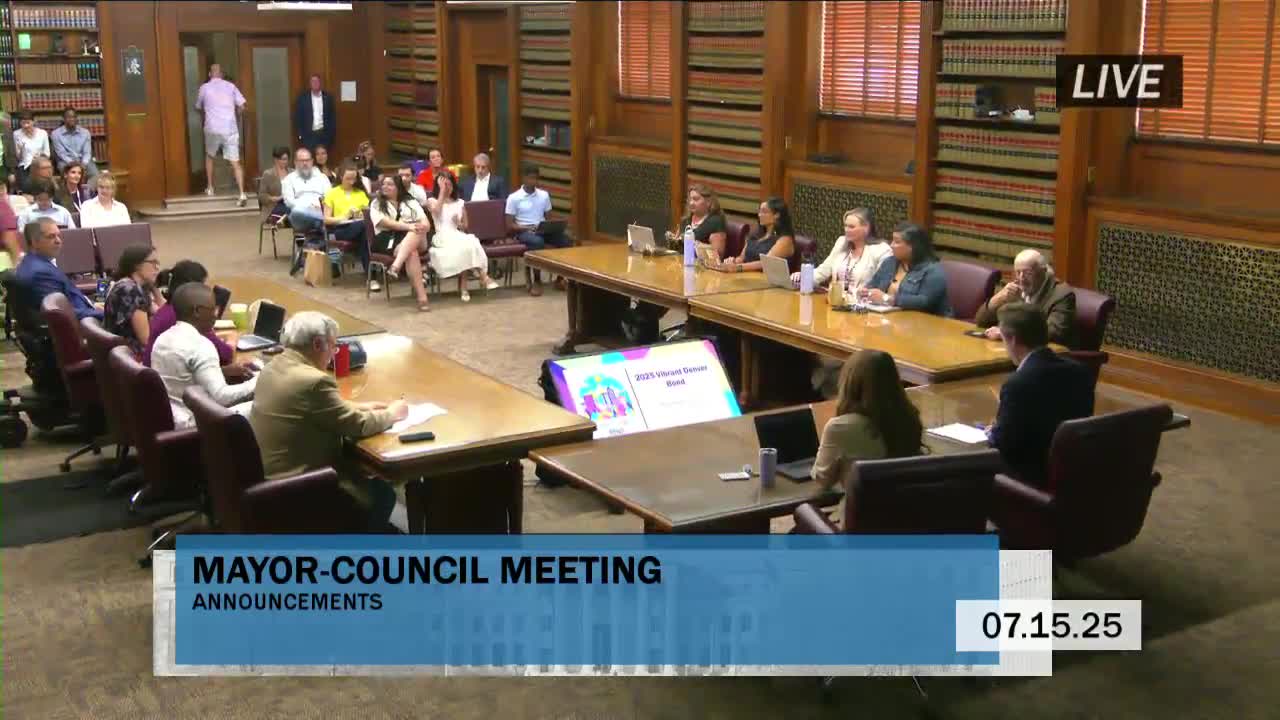
Mayor Mike Johnston and Denver City Council members on July 15 updated the council on an updated bond package draft that the administration said totals about $920 million and would be placed before voters this fall. The mayor briefed council members on community engagement, project categories and the schedule to deliver ordinance language and ballot materials.
The update matters because the bond would fund capital projects across the city — including roads and bridges, parks and cultural facilities, and public health and safety improvements — and because the council must complete ordinance and ballot steps before late August to meet printing and protest deadlines.
Johnston said the public process for the bond included more than 7,600 residents and generated roughly 1,100 project ideas totaling about $6 billion in potential investments; subcommittees winnowed those to 215 recommendations and an executive committee produced an initial list of about 48 projects valued at roughly $970 million before the current adjustments. "We had more than 7,600 residents participated in some way in this process," Johnston said. He told the council the most recent draft valued at about $920 million reflects council feedback and staff adjustments.
City staff described the proposed spending mix as roughly 43 percent for connectivity (roads, bridges, infrastructure), about 41 percent for parks, recreation and cultural facilities, and about 15 percent for public health and safety. The administration also cited a University of Colorado Boulder analysis that it said indicates bond spending can drive broader economic activity (the administration said $900 million in projects could yield about $1.7 billion in economic impact).
Council members used the briefing to press for more detail and for ways to track projects that do not make the bond but remain in the capital improvement plan (CIP) or other funding sources. Councilor JB Torres said many district micro-priorities are highly granular — new traffic signals or intersections — and asked how those recommendations will be queued in the CIP if they are not included in the bond. "It still wasn't clear to us ... how they're getting queued up in this and future CIP," Torres said.
Johnston and other staff agreed to provide follow-up briefings with Parks and Public Works staff to explain which items would be funded by the bond versus the Parks Legacy Fund or the ongoing CIP. Several council members asked the Department of Finance for a clear accounting of general obligation bond capacity and how existing GO debt and the mill levy are affected; Councilman Flynn requested a detailed debt chart showing when outstanding debt falls off and how much capacity remains. The council president and other members referenced a prior Finance committee slide deck that breaks down outstanding obligations and bond capacity.
On process and timeline, staff said they planned to circulate initial ordinance language Thursday evening, with the ordinance referred to committee the following Tuesday. Courtesy public hearings were scheduled: a courtesy hearing on July 20 and a first-reading public hearing on July 28. Without a council waiver the final vote was described as scheduled for August 4; with a waiver the administration said the ultimate deadline to complete the process for ballots and printing would be August 25. Council members discussed the waiver option and its past use for ballot referrals.
No formal motion or vote occurred in the briefing; the meeting served as an update and an opportunity for members to request more data and follow-up briefings. Staff said individual briefings with council members would continue this week and that an introduced version of the ordinance would be provided to the full council for committee hearings and floor discussion.
Next steps: staff will provide district-level project and dollar breakdowns, a debt-capacity briefing from Finance, and additional follow-up meetings with council members before the ordinance is filed and referred to committee.