Get Full Government Meeting Transcripts, Videos, & Alerts Forever!
Get email alerts on the Transportation topic
No spam. Unsubscribe anytime.
Council Approves First Reading to Appropriate Transit Matching Funds; Staff Says 2050 Tax Used for Timing
Summary
Council adopted on first reading an ordinance to appropriate reserves and authorize transfers for transit replacement and maintenance, with staff saying the city used 2050 tax reserves this year to cover local matches because of timing and midyear budget constraints.
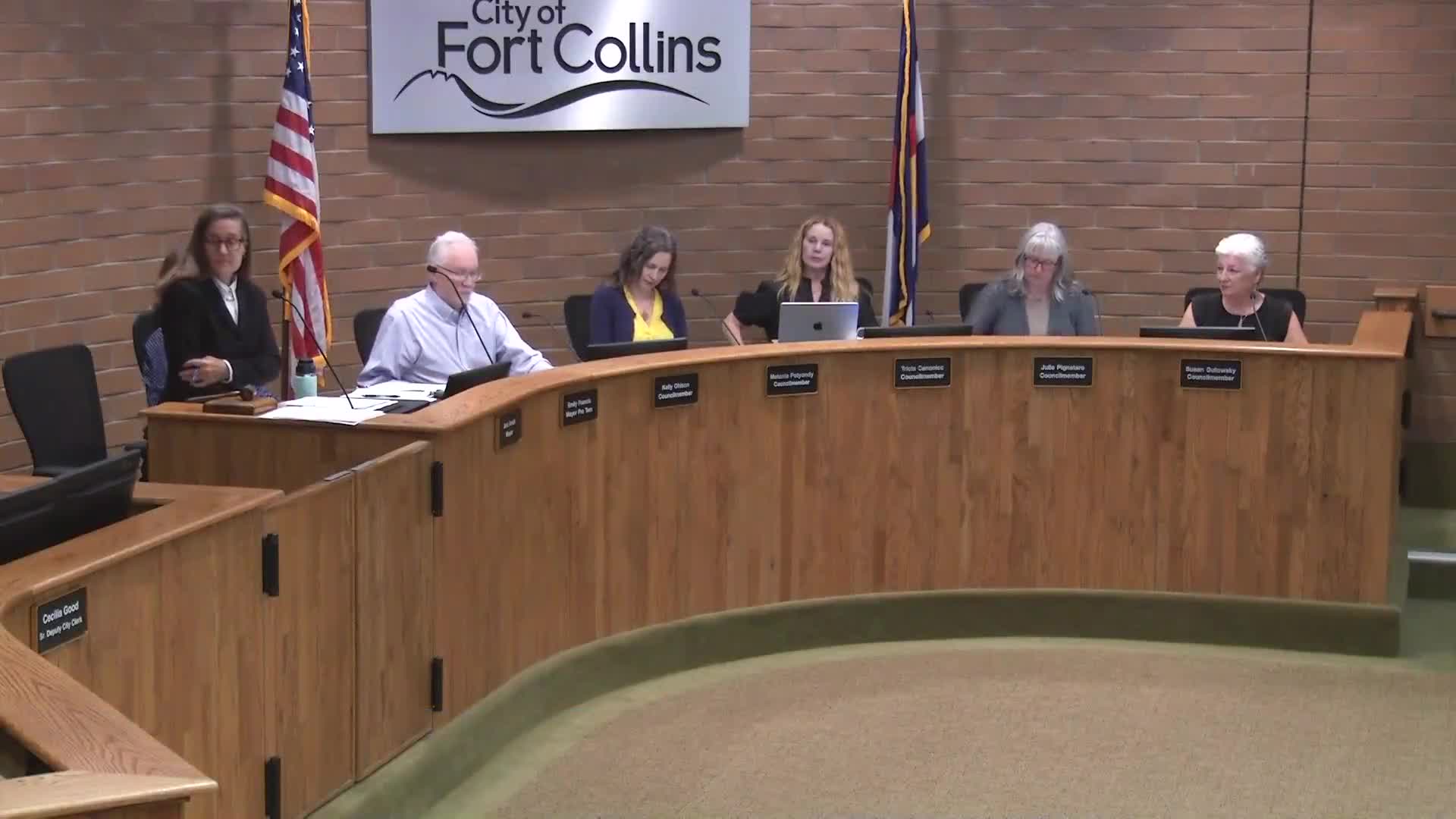
Fort Collins City Council on July 15 approved on first reading an ordinance (Ordinance No. 1182025, first reading) to appropriate prior reserves and authorize transfers for transit replacement, enhancement and maintenance. The ordinance passed on a 7-0 roll call.
Councilmember Kelly Olson had pulled the item from consent to ask how the city was using revenues from the 2050 transit tax. Monica Martinez, finance manager in Planning, Development and Transportation, told council that timing and available fund balances drove the decision to use 2050 tax reserves for local matching funds this fiscal year. Martinez said some local match needs arose earlier than the planned 2026 budget appropriations, and the 2050 tax fund was the resource available midyear to cover those obligations.
Martinez also said the transit system has growing operating costs while revenues have not grown at the same rate, creating pressure on available resources and requiring careful use of reserves. Council member Olson asked whether the 2050 tax funds would be repaid; Martinez said the city’s accounting team is evaluating reserves and that repayment from reserve balances would be considered when year-end balances are clearer.
Members of the public who spoke on the item praised and questioned aspects of service and safety. Rich Stave said he rides the system and questioned equipment priorities and rider safety; Adam Hirschhorn, a frequent rider, said afternoon buses can be busy and shared a concern about how riders with health needs are treated by security.
Council and staff said a broader discussion about transit priorities and the upcoming Transit Optimization Study — scheduled for a future council work session on Oct. 28 — will present scenarios for system expansion, hours and routes and how 2050-tax funds may support those plans. The ordinance approved tonight was a first-reading appropriation; some council members said they expect additional follow-up between readings on funding sources and priorities.