Get Full Government Meeting Transcripts, Videos, & Alerts Forever!
Get email alerts on the Sign Code Enforcement topic
No spam. Unsubscribe anytime.
Riverwoods zoning panel targets window clutter, flashing signs in Colonial Court and Shops
Summary
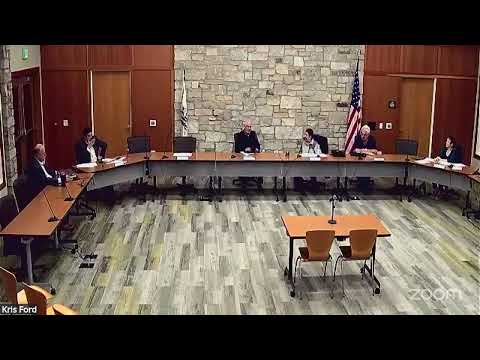
Riverwoods Zoning Board of Appeals members on Aug. 14 reviewed a staff survey showing widespread violations of the village sign code at two shopping centers and directed staff to draft recommendations for new, enforceable standards.
Riverwoods Zoning Board of Appeals members on Aug. 14 reviewed a staff survey showing widespread violations of the village sign code at two shopping centers and directed staff to draft recommendations for new, enforceable standards.
The meeting centered on a packet and photo survey presented by Director Steve Witt, who told the commission that most storefronts in Colonial Court and the Shops exceed permitted sign area and that window signage is ‘‘out of control.’’ He said the survey found area nonconformities ranging from about 13% to as high as 168% over the permitted area, several instances of lettering height outside the allowed range, and numerous window signs that exceed the village’s limit of 2 square feet. ‘‘Our code specifically says 2 square feet is all you get,’’ Witt said, reading the relevant language from section 12-4-1 and related text in the packet.
Why it matters: commissioners said the cluttered windows and flashing or neon signs make the centers look ‘‘junky,’’ reduce visibility into businesses, and create safety concerns for first responders. Several members argued that visible noncompliance discourages better tenants and perpetuates further violations by example.
Commission discussion and recommendations
Members pressed staff for a practical enforcement approach rather than immediate heavy-handed action. Betty Louie, a zoning board member, said she found the window signs ‘‘egregious’’ and compared the centers unfavorably with cleaner nearby plazas. Jim Hicks, a newly seated member, asked whether tenants had been notified; staff said enforcement had been intentionally delayed while the board reviewed the issue so rules could be clarified before citations began.
Director Witt recommended several near-term actions: remove flashing/illuminated neon signs that violate the ordinance, send a formal notice and photo documentation to each tenant, provide a short cure period (several weeks), follow with a second notice and then fines or a hearing for noncompliance. He also proposed a longer-term package of code changes and asked the commission to consider whether Colonial Court’s minimal sign language should be aligned with the Shops’ more specific special-use criteria.
‘‘We’re initially going to be looking at getting rid of the flashing signs and starting to get people to take down window signs,’’ Witt said. He told the commission he will survey nearby communities’ sign codes and return with a recommended set of specifications that address lettering height, total area limits, logos, lighting, materials and limits on aggregate informational signage in a storefront.
Enforcement mechanics and tenant licensing
Members discussed enforcement logistics. Witt said current practice is a one-time review at occupancy (sign permits issued at buildout) and the village has no routine inspection cadence; the department recently added a part-time inspector and could implement periodic checks if the ordinance and procedures are updated. Commissioners favored a three-step notice-and-cure process before fines: (1) an informational letter with the ordinance and photos, (2) a follow-up compliance notice, and (3) fines and a hearing if violations remain.
Several commissioners proposed a licensing or registration packet for new tenants at occupancy that would include the sign rules so tenants cannot claim they were unaware. Witt said that would require changes and consultation with Attorney Hoover to assess legal authority and implementation details.
Scope and types of signs discussed
The board singled out several recurring problems illustrated in staff photos: floor-to-ceiling vinyl or printed window coverings that block views into stores; multiple duplicate logos for a single tenant (door, window and wall logos); multiple ‘‘open/closed’’ signs per storefront; small pasted advertisements and handwritten or ‘‘messy’’ information signs; and neon or LED signs that are flashing.
Witt flagged specific storefronts in the packet (examples: a smoke shop with multiple illuminated signs and dozens of window stickers; the floral shop with full-coverage pink window coverings; a restaurant using graphic shades). He noted five flashing signs and at least one unauthorized portable sidewalk sign in the centers.
Board guidance and next steps
The commission asked staff to: (1) survey sign codes in neighboring communities and return with a recommended set of standards the board can review; (2) draft an enforcement plan that begins with a tenant mailing and a short cure period before fines; (3) consult with Attorney Hoover on whether special-use conditions for the Shops can be applied to Colonial Court or whether an alternate route is required; and (4) return the updated packet at the next meeting. Director Witt said he will prepare that survey and legal review for the commission’s next meeting.
Votes at a glance
- Approval of minutes for June 12: motion carried (voice vote). The transcript records an affirmative voice vote and the chair declared ‘‘motion carries.’’ - Motion to adjourn: carried (voice vote).
Ending
The chair continued the matter for additional review and scheduled further discussion for the next meeting, asking members to review the Shops’ special-use sign specifications and to send suggested changes to Director Witt ahead of the next packet. ‘‘We’ll come back with specifics so we can be logical and enforceable,’’ Witt said.