Get Full Government Meeting Transcripts, Videos, & Alerts Forever!
Get email alerts on the Post Data Report topic
No spam. Unsubscribe anytime.
POST staff present data showing surge, backlog and new abbreviated review process for serious-misconduct reports
Summary
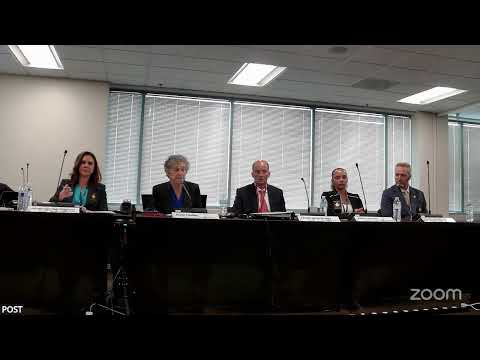
Staff for the Peace Officer Standards and Accountability Division told the advisory board July 16 that it has processed more than 37,000 agency misconduct reports and roughly 42,000 allegations, and that it is using an abbreviated review process to clear backlog while auditing a sample of closures.
Staff for the Peace Officer Standards and Accountability Division (POST) presented a statistical report July 16 to the advisory board showing a large retroactive surge of serious-misconduct reports tied to Senate Bill 2, and described new intake, prioritization and abbreviated-review procedures intended to clear a backlog while protecting higher‑risk cases for fuller review.
In a roughly 90‑minute presentation, analyst Chelsea Wajaya and bureau chiefs Sarah Wallace and Rob Guyton told the board that the division had processed more than 37,000 agency misconduct reports as of June 30, 2025 and recorded about 42,000 allegations affecting roughly 21,000 unique peace officers statewide. After a peak quarter that included more than 6,800 retroactive reports before the July 1, 2023 SB 2 deadline, the division said intake has since plateaued at about 2,500 reports per quarter.
The division outlined delays between agency reporting and agency findings: staff said agency supplemental reports that carry final dispositions typically arrive an average of 241 days after an initial open report (median ~240 days). POST staff told the board this timeline reflects existing investigative timelines at agencies (including the Peace Officer Bill of Rights limit of 365 days for internal investigations), and said those delays extend the time before POST can complete its own review.
Why this matters: POST staff said the volume and age of retroactive reports created a clearance problem. To address that while focusing limited resources on higher‑risk matters, the division described an abbreviated review process for cases in which agencies have issued non‑sustained, exonerated or unfounded findings (excluding use‑of‑force matters reviewed by law‑enforcement consultants). Under that process, staff review agency findings and evidence and produce a closure statement rather than a full consultant file review; the division said a law‑enforcement consultant will audit a sample of those closures to check for missed issues.
Details and outcomes described to the advisory board included: - Agency participation: most agencies have submitted multiple SB 2 reports; a small number (including two moderately sized agencies identified in the presentation — the University of California San Francisco Police Department and the Department of Health Care Services) had not reported and are being contacted for outreach. Staff said SB 2 does not include a statutory penalty for non‑reporting. - Public complaints: POST has received more than 2,300 public complaints from roughly 1,200 complainants; staff said about 631 public complaints required additional agency documentation and 826 complaints have been closed after review. Staff noted that in roughly 27% of public‑complaint cases the initial submission lacked a full picture, requiring follow‑up with agencies. - Allegations and priority labels: of about 42,000 allegations, POST estimated 85% are potentially actionable under current statutory criteria (for example, dishonesty or certain uses of force may be actionable even when they relate to older conduct). The top allegation categories reported were excessive use of force, demonstrating bias and abuse of power; many reports received “priority 3” or “open investigation” labels (non‑sustained agency findings or ongoing agency investigations). Dishonesty allegations were likelier than other allegation types to carry sustained agency findings and higher priority labels. - Case closures and discipline: roughly 76% of ITS (immediate temporary suspension), public‑complaint and priority cases are closed; staff said POST closures are now catching up with intake in part because of the abbreviated review. POST reported that approximately 2% of closed cases resulted in disciplinary action; staff provided an illustrative comparison showing POST’s annual action rate (about 0.2% of licensees annually) is comparable to or higher than several other California licensing agencies when adjusted for population. The division said it had taken 544 disciplinary actions in the period reported and had issued 56 notices of intent to pursue certification action. - Decertification pipeline: as of June 30, staff said 56 notices of intent were sent to officers, 36 resulted in default decisions (failure to appeal or timely file a notice of defense), 21 were appealed and 15 cases had been heard by the board and commission; of those 15, the board recommended revocation in 12 cases, and the commission voted to revoke in 8 of 15 as of the reporting date.
During the presentation board members raised questions about outreach to non‑reporting agencies, the absence of statutory penalties for non‑reporting, whether POST can audit agency files under current statutory authority, and community education about what constitutes reportable serious misconduct under SB 2. POST staff said they are expanding outreach, that auditing authority for serious‑misconduct reporting was discussed internally (and could require regulatory or statutory change), and that trainings have been offered to both agency command staff and to line officers as well as combined sessions that included community members and line officers.
Board members also pressed staff on evidentiary standards and reasons for “no further action” closures. POST staff said that most NFA closures fall into three categories: not serious misconduct (insufficient to meet the statutory definition), nonactionable (outside POST’s statutory timeframe or jurisdiction), or failure to meet POST’s clear‑and‑convincing evidentiary standard (POST uses a higher burden of proof than many agency internal affairs processes).
Board members requested additional statistical breakdowns for future reports (for example, who initiates complaints, whether agency filings are proportionate to agency size, and further detail on cases with sustained agency findings that do not result in POST action). Staff said they would return with refinements in subsequent reports.
The board did not take formal action on the data report; the presentation was followed by three decertification matters that the board separately heard and voted on.