
Fargo officials say 2025 legislative session centered on tax reform; city readies follow-up on transit, local control
Get AI-powered insights, summaries, and transcripts
Subscribe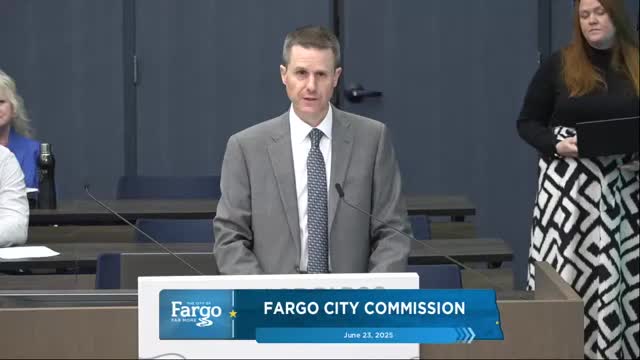
Summary
A city briefing reviewed Fargo’s 2025 legislative work — focused on tax reform, infrastructure and transit — and urged a formal bill‑positioning process and continued engagement during interim studies.
Fargo City Commission officials received a briefing on the 2025 North Dakota legislative session that said tax reform dominated lawmaker attention and that city staff will maintain an active role on upcoming interim studies, particularly on transit and infrastructure.
The presentation, delivered by Terri Efferts, special assistant city attorney, framed the session as a “unique session” dominated by tax reform and reported that Fargo monitored, supported or opposed roughly 80 bills. “This session there were 1,089 bills introduced,” Efferts said, describing a heavy workload for legislative staff and the North Dakota League of Cities.
The briefing said Fargo’s legislative advocacy emphasized infrastructure funding, protecting local controls, strengthening public safety and shaping policy on transportation and taxation. Efferts noted work on transit funding and water issues and described coordination with Mayor Mahoney, City Administrator Mike Redlinger and the League of Cities. She said the city helped organize other large cities facing transit budget shortfalls and that some legislative wins were secured.
On taxation, Efferts described House Bill 1176’s 3% property tax cap as the session’s central reform and urged city departments and commissioners to track the cap’s effects closely. “Because this is new policy and 3% caps is something that we have never dealt with in the state before is to really take a close look at how it impacts you at the different levels,” she said.
Efferts recommended that Fargo adopt a formal bill‑positioning process so the city can present a unified support or opposition stance and reduce the risk of individual commissioners contacting legislators in ways that undercut agreed positions. She also urged earlier identification of bill sponsors, more pre‑session briefings and continued quarterly meetings with local legislators.
Commissioners asked about the likely turnover among legislators caused by term limits and other changes; Efferts warned of “a large loss of knowledge” and said the city should plan for renewed outreach as new legislators take office. She said the Legislative Management process will assign interim committees that will study 47 interim topics and that Fargo should secure seats at committees for topics of local interest.
No formal commission action was taken; the session report was delivered as an informational presentation and commissioners indicated they would follow up with staff on monitoring the 3% cap, transit studies and legislative positioning.