Get Full Government Meeting Transcripts, Videos, & Alerts Forever!
Get email alerts on the Public Safety Legislation topic
No spam. Unsubscribe anytime.
Local police cite several legislative wins: longer mental‑health hold, fleeing‑owner liability and new ID provisions
Summary
Fargo Police officials highlighted state bills affecting police work, including an increase to 72‑hour mental‑health holds, a fleeing‑owner liability measure and a licensed‑premises ID infraction tied to underage patrons; officials said these changes should aid enforcement and safety.
Fargo Police representatives told the delegation that multiple bills passed that they expect will improve law‑enforcement options and traffic safety.
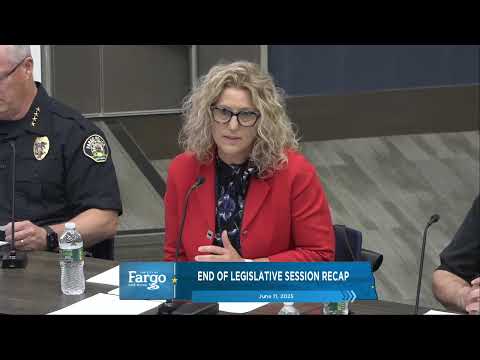
Chief (name not provided in transcript) summarized legislation including a bill raising the emergency mental‑health hold to 72 hours, which police described as enabling more thorough mental‑health evaluations. “2171 that passed increasing the mental health hold to 72 hours... will be very significant in allowing a valid mental health evaluation of a lot of folks,” the chief said.
The police briefing also highlighted a “fleeing‑owner liability” bill (referred to at the meeting as 12/29) intended to help hold vehicle owners accountable when their vehicle is used in fleeing law‑enforcement stops. Officials said the law gives police an additional mechanism to deter high‑speed or dangerous vehicle flight and could serve as a deterrent.
Another bill (referred to as 13‑75 during the briefing) was described as changing licensed‑premises processes and making it an infraction if an alleged underage patron refuses to show ID, which police said provides a new enforcement tool and some protection for licensed businesses.
Police speakers also said the legislature ordered a study on traffic fines and fines increases; the chief said current fines are often too low to deter repeat offenders and welcomed study participation by law enforcement. No new local ordinances were adopted at the briefing; the comments described how state changes will affect local enforcement and next‑session priorities were suggested (for example, a stop‑and‑ID statute).