Get Full Government Meeting Transcripts, Videos, & Alerts Forever!
Get email alerts on the Homelessness Engagement Center topic
No spam. Unsubscribe anytime.
Fargo officials keep engagement‑center plan alive after state funding fails
Summary
City leaders and public health staff said a proposed diversion/deflection center for people experiencing homelessness did not receive anticipated state funding, but the city will continue to pursue a walkable engagement‑oriented resource center with private and nonprofit partners.
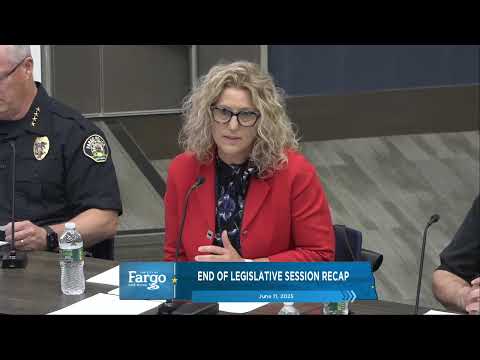
Mayor Tim Mahoney and city and public‑health staff told Fargo’s legislative delegation that state funding for a planned diversion/deflection component of the city’s engagement center did not pass, but the city remains interested in relocating and expanding its engagement services into one hub.
“That didn’t come through in the legislative bill,” said Jen Vollodrecht, public health (presenter), referring to the state proposal to add a diversion and deflection center to the engagement center. Vollodrecht said the city is exploring private partnerships and the Bloomberg Philanthropies design assistance to evaluate feasibility and site options.
The proposal discussed at the briefing would combine outreach, referrals and clinical services in a single “resource center and referral center,” city staff said. Officials emphasized that the center should be within walking distance of downtown transit and service providers to be usable by the population it intends to serve.
Mayor Mahoney said the site originally being considered, a property tied to Fargo Brewing, is no longer available. He said the city and staff want a location that is walkable to people in need and to existing providers such as Family Healthcare Clinic and Southeast Health psychiatric services.
City and legislative participants also discussed limits on state reimbursement if too many residential beds are colocated with a diversion site. Vollodrecht warned about federal Medicaid exclusions under the Institutionalized Mental Disease (IMD) rules if a colocated project consolidated too many beds: “If we get over too many beds, we’re concerned about IMD and exclusions,” she said. That concern shaped discussion about whether some bed‑based services would need separate addresses to receive state payment.
Participants said they will continue to search for private vendors and non‑profits to partner with and explore design options offered pro bono by Bloomberg. No site was identified at the briefing and no formal city action was taken.
Officials framed the project as a step to reduce unsheltered homelessness by improving referrals and getting people into housing rather than as an expansion of services without placement goals. The city emphasized the aim to “get them into housing” and to avoid drawing a larger out‑of‑area population to downtown services.
The legislative delegation and city staff agreed to keep communication channels open while the city develops a feasibility plan and seeks partners and locations.
Looking ahead, Vollodrecht said the engagement‑center concept remains under active consideration even without the state appropriation and that further feasibility work and private partnerships will guide next steps.