
Topeka council approves changes to dangerous‑dog and animal‑cruelty rules to reduce long shelter holds
Get AI-powered insights, summaries, and transcripts
Subscribe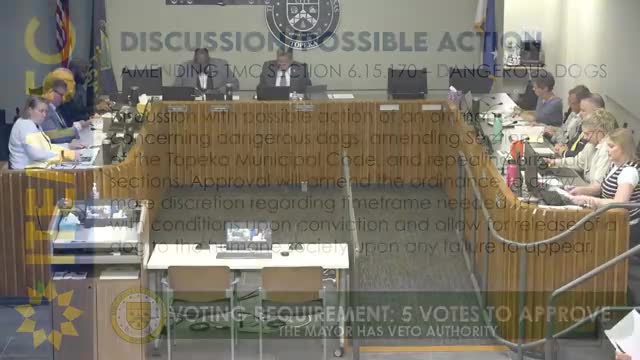
Summary
The governing body approved amendments to the city’s dangerous‑dog ordinance and animal‑cruelty bond rules aimed at reducing lengthy kennel holds and allowing judges more time to permit compliance rather than causing immediate euthanasia.
The Topeka governing body on Wednesday approved two ordinance amendments that city officials said will help reduce prolonged kennel confinements and allow more effective prosecution and care of animals held as court evidence.
City Attorney Amanda Stanley introduced the agenda items and deferred to subject‑matter experts. Kelly Tressel, chief of prosecution, told the council two targeted changes to the dangerous‑dog ordinance and related procedures would reduce unintended euthanasia and prohibit long, open‑ended holds that staff said are harming animals and constraining the local shelter.
Tressel said one change would allow judges to consider a defendant’s good‑faith reasons to extend the 15‑day compliance period for dangerous‑dog conditions — spaying/neutering, microchipping, muzzling in public, a maximum leash length and a six‑sided enclosure — because “it is actually 100% impossible in the city of Topeka to make an appointment with the vet and have a dog fixed within 15 days,” a constraint that has led to euthanasia in prior cases. The council approved the dangerous‑dog amendment (action item C) by voice vote; officials recorded the motion as carried with eight yes votes.
A separate amendment tightened procedures for animals held during cruelty or dangerous‑dog prosecutions. Officer Bowers and court staff described repeated, months‑long court holds that keep animals in kennels as evidence and stressed the mental and physical toll on animals and the shelter. The cruelty amendment would adopt a 21‑day bond system mirroring Kansas practice in which defendants must post a bond covering an initial 30 days of boarding and medical care; if they fail to pay, the shelter may take possession. City animal control staff and Helping Hands Humane Society staff testified that long holds occupy scarce kennel space and raise medical costs.
Costs and impact: animal‑control staff provided an estimate covering five years of board costs for court‑held animals at $251,323 and said a 21‑day bond requirement would have reduced that to about $94,251 in the same period — a potential city savings of roughly $157,000 on boarding alone, with additional medical costs not fully included in that figure. Staff said 30% of court holds in 2023 exceeded 30 days.
Council action and next steps: the governing body approved the cruelty ordinance amendment (action item D) following the public discussion; the motion carried with eight yes votes. City staff said the ordinance changes can be placed on the consent agenda next week to finalize the technical amendments and to allow implementation coordination with Helping Hands Humane Society.
Ending: presenters emphasized the changes aim to preserve animal welfare, reduce shelter burdens, and ensure owners bear financial responsibility for prolonged care when appropriate. Officials urged continued public education about owner responsibilities and support services to reduce repeat incidents.