
Committee approves RHID policy tweak to allow higher cap rates for targeted projects
Get AI-powered insights, summaries, and transcripts
Subscribe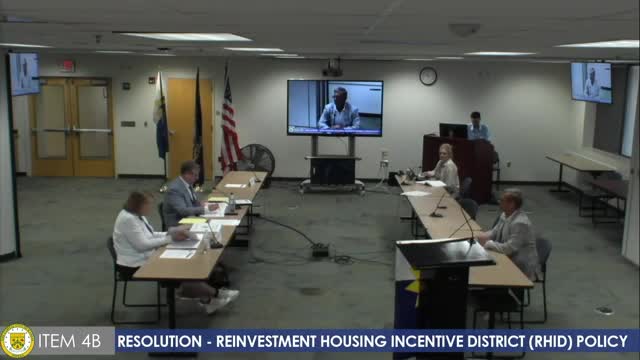
Summary
The Policy and Finance Committee approved a change July 8 allowing the RHID review team to recommend higher capitalization rates for projects that meet specific criteria, increasing potential incentives for targeted developments.
The Policy and Finance Committee on July 8 approved a staff recommendation to amend the Reinvestment Housing Incentive District (RHID) policy to allow the RHID review team to recommend higher capitalization rates for certain projects, increasing the potential incentive available to developers.
Staff explained that RHID incentives use a “but‑for” test to determine whether a project needs public assistance to be viable, comparing projected rates of return with and without incentive. The proposed change gives the review team objective factors to justify using a cap rate above market for projects in targeted circumstances — examples cited included downtown redevelopment, projects providing workforce or affordable housing, historically undeveloped property and blighted areas under KSA 12‑17‑70, and where developers place long‑term restrictive covenants on property.
Staff said the proposal was developed during the Union Tower discussions and that their recommendation included a benchmark cap rate of 8.5% in defined circumstances, above typical market rates used in RHID calculations. “Our recommendation was use a cap rate of 8.5%, which is a little higher than market,” a staff presenter said, adding the higher cap rate results in a larger incentive allowance when the project meets the identified criteria.
Why it matters: allowing a higher cap rate in specific, justified cases increases the financial incentive that can be offered under RHID to spur development that staff believes would not otherwise proceed. That can make some large downtown or affordable housing projects financially viable for developers.
Committee action: a committee member moved to approve the amendments, the motion was seconded and members voted in the affirmative. Staff said the change is the current amendment under consideration and that other small language cleanups tied to the housing study were included.
Next steps: staff will finalize policy language and bring the RHID amendment forward as an item for the governing body to adopt; staff also noted they updated the RHID materials to reflect the housing study’s demand projections over a 20‑year timeframe.