
City reports improved midyear finances but council debates notifying county about possible mill‑rate increase
Get AI-powered insights, summaries, and transcripts
Subscribe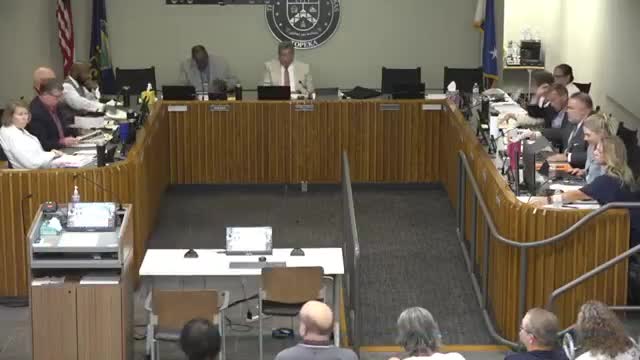
Summary
City staff reported a slightly stronger midyear outlook for the general fund and reduced the projected draw from reserves, while the council debated whether to notify the county that it may consider exceeding its revenue-neutral mill rate in 2026.
Josh MacInarney, the city’s Division Director of Budget and Finance, told the governing body the general fund is projecting $119 million in revenue for 2025 and that major sources—property taxes and sales taxes—are tracking slightly ahead of last year. MacInarney said collections for the fiscal year indicate the planned draw from the unassigned reserve to balance the budget likely will be smaller than originally forecast: instead of a $10.6 million draw the city now projects needing roughly $9.5 million if current conditions hold and no fall recruit classes for police or fire are added.
MacInarney reviewed revenue drivers: 98% of property-tax collections are in for the fiscal year’s main disbursements, sales tax receipts through four months are about 2.25% higher than last year and franchise-fee receipts are projected to exceed budget after an unusually cold winter. On the expense side, personnel remains the largest cost; with current headcount the general fund is projected to be under budget on personnel but adding recruit classes for police and fire in the fall would push personnel spending above budget.
Staff reminded the council that a $10.6 million transfer from the unassigned reserve had been assumed in the adopted budget; the midyear projection reduces that possible draw. MacInarney noted enterprise and internal service funds are behaving as expected, but the Special Highway Fund remains constrained by stagnant gas-tax revenue and will need attention in future budgets.
Separately, the council discussed and set public hearing dates for the city’s 2026 budget and for Topeka Metro’s revenue-neutral rate. Josh explained the formal notice the county requires when a taxing entity intends to exceed its revenue-neutral rate; for the city the resolution would permit a maximum possible mill levy up to 37.956 (one mill over the current 36.956) — an option, not a decision. Councilman Duncan said he would not support asking the county to accept a notice to exceed the revenue-neutral rate, reiterating his ongoing opposition to raising the mill rate. The council set the public hearings for Aug. 26 to consider revenue-neutral matters and the 2026 budget timeline.
Council members asked staff to provide detailed materials during the coming budget process, including the cost of adding recruit classes, and to continue public outreach ahead of hearings.