Get Full Government Meeting Transcripts, Videos, & Alerts Forever!
Get email alerts on the Latin America Religious Freedom topic
No spam. Unsubscribe anytime.
Speaker highlights cartel violence against clergy in Latin America and urges protective measures
Summary
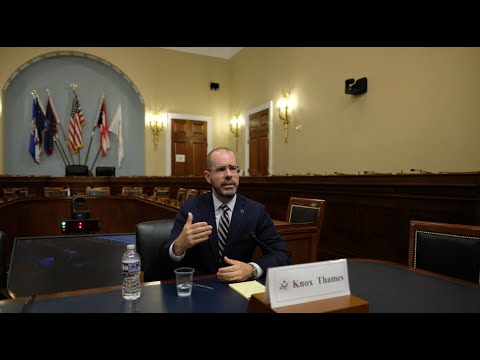
Knox Thames identified attacks on pastors and church workers by criminal groups in Colombia and elsewhere as an emerging threat to religious freedom in the Western Hemisphere and urged restoration of state protection lists and congressional pressure.
Knox Thames told the Helsinki Commission audience that criminal organizations in the Western Hemisphere are increasingly targeting religious leaders and church workers, creating a new set of drivers that threaten religious freedom and community safety. He cited recent murders of seven church workers in Colombia by an armed group and said that a domestic protection mechanism that once listed religious leaders had been removed two years ago. "We think that the murder of these church workers... is the sad hook to go back to the president and say, you need to fix this," Thames said.
Thames said restoring religious communities to lists of eligible protected groups could give state authorities tools to shield clergy and prevent further attacks; he said congressional advocacy can be a useful lever to press partner governments on implementation. "That's something where congressional voice is really, really helpful," he told staffers and attendees.
At the briefing, Thames described the Western Hemisphere as comparatively free on religious issues in most countries but singled out Cuba, Nicaragua and Venezuela as exceptions. He urged targeted attention to criminal‑violence drivers that force pastors to flee, be disappeared or be killed.
The briefing did not announce specific U.S. assistance or new protective measures; Thames said advocacy and diplomatic engagement are paths to securing policy fixes in partner countries.