Get Full Government Meeting Transcripts, Videos, & Alerts Forever!
Get email alerts on the Peace Negotiations Ukraine Russia topic
No spam. Unsubscribe anytime.
Panelist: Agreements that let occupiers keep territory risk renewed conflict in Ukraine
Summary
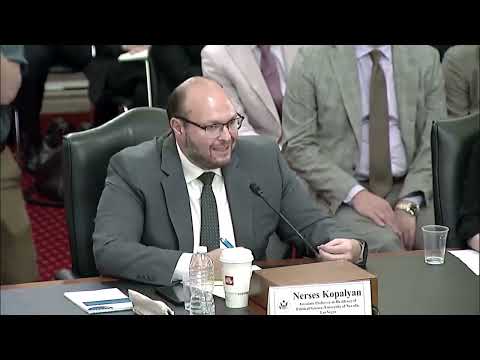
A panelist at an unidentified meeting said Tuesday that peace agreements that allow an aggressor to retain conquered territory or are imposed under pressure amount to “bad peace” that can reopen conflict, using Russia—s post-Soviet interventions as an example.
A panelist at an unidentified meeting said Tuesday that peace agreements that allow an aggressor to retain conquered territory or are imposed under pressure amount to “bad peace” that can reopen conflict, using Russia—s post-Soviet interventions as an example. "Bad peace building is simply not peace," the panelist said.
The panelist said negotiators and lawmakers should assess any deal first on its likelihood to collapse and provoke renewed fighting. "The first metric we need to pay attention to is that if you look at the deal, what is the propensity of that deal to collapse and lead to more conflict?" the panelist said. The speaker warned that terms such as allowing Russia to absorb territory it has conquered or to formalize control of Crimea would be unacceptable to many Ukrainians and therefore unsustainable.
The panelist said a second test is whether an agreement is ‘‘commensurate with the will of the people.’’ "The government, for example, may be pressured to signing something, but that's not gonna be sustainable a few years from from that point that people rise up against what is in essence a form of injustice," the panelist said, adding that elements of equity and fairness are essential.
A third required element, the panelist said, is enforceable mechanisms that make sure commitments are honored. "There have to be enforcement mechanisms," the panelist said, citing international security guarantees as an example and asking what would happen if Russia reneged and resumed hostilities days, months or years later.
The speaker framed these three characteristics—propensity to collapse, popular legitimacy and enforceability—as the main criteria "members of Congress should pay attention to" when evaluating proposals toward a settlement. The remarks focused on durable, "sustainable peace," and contrasted that with agreements produced under coercion that are likely to produce frozen conflicts and further instability.
The comments were discussion rather than a formal action; no votes or motions were recorded on the topic in the available transcript.