Get Full Government Meeting Transcripts, Videos, & Alerts Forever!
Get email alerts on the Curriculum Grievance Hellgate topic
No spam. Unsubscribe anytime.
Hellgate teacher’s grievance challenges process used to change media‑arts offerings
Summary
A Hellgate High School teacher filed a Level‑4 grievance arguing the district did not follow its curriculum review process when shifting staff and course offerings away from the AV/media‑arts pathway; the board rejected the grievance but directed a review of related policy practices.
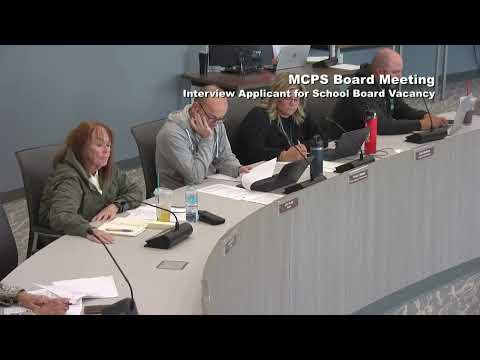
Beth Cole, a Hellgate High School teacher, presented a Level‑4 grievance to the Missoula County Public Schools Board of Trustees on July 15 alleging the district did not follow Board Policy 2,120 (curriculum review) when administrators eliminated AV/media‑arts pathway classes and added a new social media production pilot course.
"I am grieving Board Policy 2021," Cole told the board, and argued that the AV pathway ‘‘garnered 281 student requests’’ in 2024–25 while the new social media production class drew 68 requests in the same period. She said the removal of the AV pathway could reduce Perkins grant funding and that teacher‑led curriculum review — which she characterized as the district’s past practice — did not occur.
Administration responded that principals and department chairs at Hellgate, Sentinel and Big Sky reviewed enrollment and program demand and that staffing and master‑schedule decisions were driven by those data and by added graduation requirements (financial literacy). Assistant superintendent/administration staff explained the new social media production pilot had three sections with roughly 120 students signed up and that principals were tasked with making schedules more efficient after recent budget pressures.
Board discussion focused on whether policy language had been violated, not on the pedagogical merits of either course. Trustees asked whether curriculum review timelines in district policy were still aligned with state law and current practice. Counsel and staff explained that policy requires district review at least every five years but that the board’s formal role is adoption of significant curriculum changes; pilot courses are permitted under Policy 2,311 and can be brought later for board action.
Trustee discussion found no clear, grievable violation of policy: the board voted to reject the grievance by a motion and second, with trustees explaining the matter reflected a philosophical and procedural difference rather than a policy breach. Several trustees, however, said the grievance highlighted the need to update and clarify curriculum policy and review practices.
The board directed administrators to proceed with the curriculum review cycle this year and flagged policy language for consideration during the coming policy review work. Cole said she was concerned about retention, teacher voice in curriculum decisions and missed opportunities to align course offerings with local industry changes, including film‑industry growth tied to recent state incentives.