Get Full Government Meeting Transcripts, Videos, & Alerts Forever!
Get email alerts on the Sewer Bonds topic
No spam. Unsubscribe anytime.
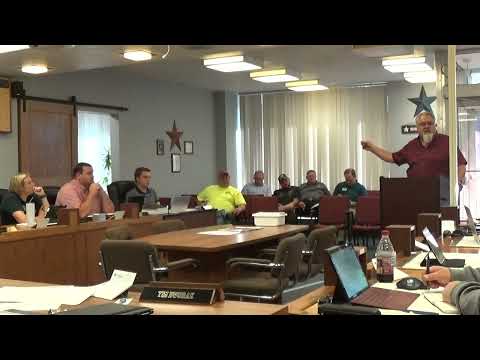
Seward approves up to $37.3 million sewer revenue bonds to fund wastewater plant work
Summary
The Seward City Council on a 7-0 vote authorized issuance of sewer revenue bonds not to exceed $37,286,000 and approved a loan agreement with the Nebraska Department of Water, Energy and Environment to finance wastewater treatment plant improvements, including an emergency clause to speed closing and secure a 1.4% SRF rate.
The Seward City Council voted unanimously Wednesday to authorize sewer revenue bonds of not more than $37,286,000 and to approve a loan agreement with the Nebraska Department of Water, Energy and Environment to finance improvements to the city’s wastewater treatment plant.
Greg, a city staff member, told the council the action was needed to satisfy bond-counsel conditions tied to the city’s 2021 wastewater bonds and to finalize State Revolving Fund financing at a 1.4% interest rate. “We need to have a level of coverage on our debt service,” he said, explaining bond counsel requested a 1.25 debt-service coverage ratio rather than the 1.0 standard because the new issue will run concurrently with earlier bonds.
The city’s analysis used the 2024 audit numbers, a 15% utility rate increase scheduled for October and a 3% annual rise in operating costs to project net revenues through 2028; that projection, Greg said, showed the coverage ratio at or just north of the 1.25 level required by the 2021 bond documents. City staff and consultants told the council they worked over the prior weekend and with state staff to meet the financing deadline; Greg said missing the deadline would raise the SRF rate to 1.5% and increase long-term interest costs.
Mike Rogers, the city’s bond counsel, and Colin, a consultant from SEH, were cited by staff as having completed review and exhibits needed for closing. The ordinance enacted an emergency clause so the documents could be signed and delivered immediately after the meeting.
Formal action: the council introduced and passed Ordinance No. 2025-21 authorizing the bonds, pledging sanitary sewer revenues for payment, and approving the loan agreement; the roll-call vote was recorded as 7-0 in favor.
Why it matters: the bonds fund planned upgrades to the wastewater treatment plant and secure low-cost SRF financing; staff said the difference between a 1.4% and 1.5% rate over a multi-decade financing is material for a project of this scale.
Next steps: the city will finalize signatures and close the SRF loan and bond documents. The ordinance includes routine covenants, a single-promissory-note structure and the emergency declaration to put the authorization into immediate effect.