Get Full Government Meeting Transcripts, Videos, & Alerts Forever!
Get email alerts on the Mental Health Response topic
No spam. Unsubscribe anytime.
Washington County co‑responder unit reports expanding follow‑up care, crisis responses
Summary
Deputy‑clinician teams described embedded partnerships with human services, 7 a.m.–10 p.m. coverage, four teams, and at least 550 new individuals served across 2024–2025, with examples including death notifications, victims of violent home invasions, long‑term engagement with a person with schizophrenia, and assistance in a multi‑day standoff.
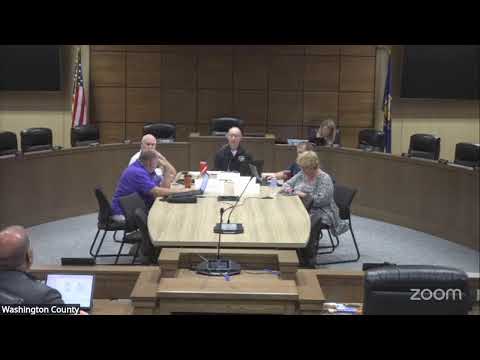
Deputy Blake DeMonk and human services clinicians Dave Arndt and Abigail Rebecchi briefed the Public Safety Committee on the sheriff’s office co‑responder unit, outlining how embedded deputy‑clinician teams respond to mental‑health and trauma‑related incidents and provide extended follow up.
DeMonk said the county’s unit consists of four teams, each pairing one deputy with one mental‑health clinician. The unit provides county coverage from about 7 a.m. to 10 p.m. daily and responds to referrals from municipal police departments, sheriff deputies and other agencies. DeMonk said the county population is about 137,000 and that the sheriff’s office jurisdiction population is about 50,100.
Arndt described the partnership as “truly embedded with the sheriff’s office,” meaning clinicians share shifts and respond in person with deputies rather than only providing phone support. The teams have mutual read‑only access across law enforcement and clinical records to aid response and follow‑up, the presenters said.
Presenters described several case examples: a death notification where the team used collateral information to safely notify and support a resident who had preexisting mental‑health concerns; a double break‑in and armed home invasion where the team provided victim support and accompanied victims during a victim‑impact statement; a long‑term case in which clinicians and deputies made 27 contacts for a resident diagnosed with schizophrenia, connected him to psychiatric care and case management and reported no subsequent law‑enforcement contacts; and a request from a neighboring county during a prolonged armed standoff where Washington County clinicians assisted crisis negotiators and supported an evacuated neighbor on scene.
DeMonk and Arndt said the unit prioritizes voluntary engagement, rapport building and repeated follow‑up. The presenters reported the unit had served about 550 new people between 2024 and the time of the presentation, and that the number is likely higher now when follow‑up contacts are included. All unit members receive FBI crisis negotiation training and clinicians hold master’s degrees in relevant fields, the presenters said.
Committee members and the committee chair praised the unit’s role in diverting people from repeated emergency responses and providing support for victims and people with severe mental illness. The presenters offered to provide more detailed service statistics and said they continue to refine coverage and partnerships with municipal agencies.