
Everett staff to recommend 25 mph limits on Sixteenth and Holly, unveil citywide speed-management plan
Get AI-powered insights, summaries, and transcripts
Subscribe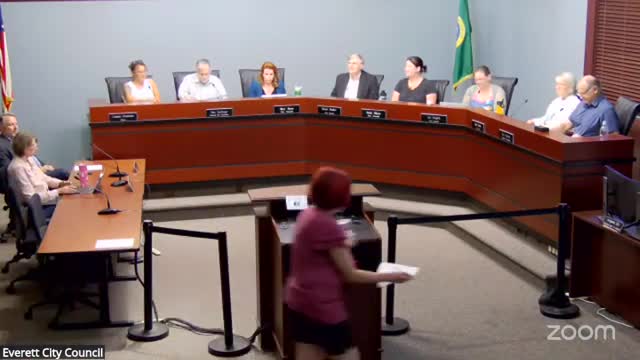
Summary
City staff told the Everett City Council on July 16 they will recommend reducing speed limits on portions of Sixteenth Street and Holly Avenue to 25 mph, present a federally funded citywide speed management plan next month, and bring several public-safety ordinances for council consideration in coming weeks.
Public safety staff told the Everett City Council on July 16 that they will recommend lowering speed limits on Sixteenth Street and Holly Avenue to 25 mph and will present a federally funded citywide speed management plan next month. The staff member said the recommendations target corridors that have not had speed changes in decades and are part of a larger effort to evaluate every arterial in Everett.
The recommendation would set a 25 mph limit on Sixteenth Street between Grand Avenue and Marine View Drive and on Holly Avenue between 100th Street Southwest and Evergreen Way, the staff member said. City staff also reported they are still analyzing Dakota and Madison avenues and expect enforcement and engineering work before bringing those streets forward. The forthcoming plan — funded by a federal grant, the staff member said — will also evaluate a 20 mph local-street limit, a citywide alley speed limit and sites that could use the state legislature's newly approved neighborhood shared-street option.
In addition to the speed-management work, the same staff update listed three public-safety ordinances staff will return with: a graffiti-prevention ordinance expected in early August, a proposed ordinance to criminalize knowing or reckless exposure of a child to fentanyl, and a staff review of the recently passed stay-out-of-drug-areas ordinance to identify additional neighborhoods for consideration. The staff member identified the Port Gardner neighborhood and properties near "40 First And Colby" as areas the city will examine as part of that review.
These were announcements and directions from staff; no formal council vote on these items was taken at the July 16 meeting. Council members and the mayor asked only clarifying questions at the time; staff indicated they will return with formal recommendations and proposed ordinance language in future meetings.
Why it matters: the speed-management plan and proposed changes could alter posted limits on multiple city streets and affect enforcement, design and neighborhood traffic patterns. The proposed fentanyl-related ordinance addresses a gap staff said exists in state law with respect to fentanyl exposure of children. The graffiti and stay-out-area reviews relate to neighborhood livability and enforcement policy.
What was not decided: staff did not present final ordinance language, cost estimates, or implementation dates at the July 16 meeting. Specific enforcement protocols, engineering treatments and neighborhood outreach timelines were not specified and will be provided when the items return to council for action.
Next steps: staff will bring the formal speed-limit recommendation and the citywide speed-management plan to a future council meeting, and will return with the graffiti ordinance, the fentanyl exposure ordinance proposal and the results of the stay-out-of-drug-areas review.