Get Full Government Meeting Transcripts, Videos, & Alerts Forever!
Get email alerts on the Tax Increment Finance topic
No spam. Unsubscribe anytime.
County staff to monitor proposed TIDs in West Bend and Slinger; board raises fiscal, land-use concerns
Summary
Washington County executive committee members discussed guidance for joint review board participation on a proposed West Bend tax incremental district and amendments in Slinger, raising questions about fiscal sustainability, farmland loss and incentives for downtown redevelopment.
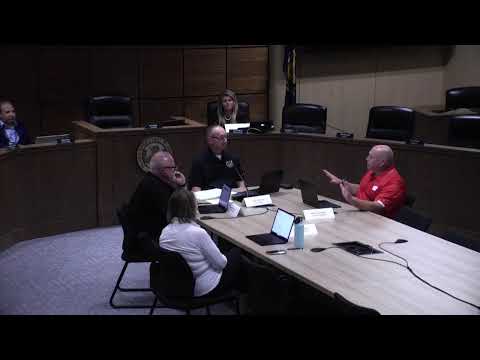
WASHINGTON COUNTY — County staff briefed the executive committee on a proposed Tax Incremental District (TID) in West Bend and two amendments in the Village of Slinger and sought guidance for the county’s participation on joint review boards. Aaron Dahl, a county staff member, described West Bend’s proposed TID No. 18 along Rusco Road between River Road and County Highway P. The proposal included a large residential component — Dahl said the plan proposes about 315 owner-occupied next-generation housing units — and an industrial component with roughly 860,000 square feet of industrial project plan area. Road reconstruction on Rusco Road and roundabouts were listed as primary infrastructure costs; one roundabout would require county involvement because it sits on a county-controlled road. Why it matters: TIDs use future property-tax increment to finance infrastructure and incentives. Supervisors asked whether a residential-heavy buildout would generate sufficient increment if industrial development does not materialize and whether the county should be comfortable with potential fiscal risk. Key points from the West Bend briefing: County staff said the city proposes owner-occupied next-generation housing (single-family, ranch, duplex and townhome models) and is considering paying $20,000 per owner-occupied unit with repayment spread over 20 years through the TID. Deb Silski of the Economic Development Washington County (EDWC) said specifics and formal applications are still outstanding and that EDWC and the city will return with phasing and design details. Slinger amendments: Dahl described two amendments affecting TID Nos. 8 and 4 in the Village of Slinger. The changes largely reassign parcels between districts so the village can finance incentives across a longer schedule; the county heard that the amendments are not being used to rescue financially distressed districts but to lengthen the life of certain parcels to spread annual impacts. One amendment would make TID No. 4 eligible to act as a donor district and transfer increment to TID No. 6 to support downtown redevelopment on a parcel that had been a funeral home. Dahl said the proposed downtown project includes roughly 39 housing units (about 30 apartments and nine townhomes), first-floor commercial space and below-grade parking. The village identified the incentive amount at about 11.5% of project cost, within the 10%–15% range county staff said they commonly see. Board concerns and guidance: Several supervisors voiced fiscal caution. Supervisor Kelly asked whether residential increment alone would cover costs if the industrial portion fails to develop and noted the county is already nearing the end of the life of multiple TIDs; Kelly asked staff to press developers and the city for realistic market analysis and fiscal safeguards. Supervisor Scholtes asked to confirm that the NextGen units would be owner-occupied (county staff and EDWC said they would). Supervisors also debated the tension between preserving farmland and allowing development in and near existing municipalities; some members noted the parcels in question are already in or near city limits and adjacent to existing industrial uses. Outcome and next steps: County staff said they would represent the county on joint review boards, ask detailed fiscal questions at the joint-review meetings, and return with additional information on phasing, rail access for industrial sites and the NextGen housing design and incentives. No formal county vote to oppose the TID proposals was taken at the executive committee meeting.