Get Full Government Meeting Transcripts, Videos, & Alerts Forever!
Get email alerts on the Budget Finance topic
No spam. Unsubscribe anytime.
Board adopts FY 2025–26 budget, approves 28.5‑mill levy and budget revisions for 2024–25
Summary
After a public hearing, the school board adopted the FY 2025–26 budget, approved a county request to levy 28.5 mills and approved revisions to the 2024–25 budget. Staff presented revenue changes tied to mineral receipts, a tax-shortfall grant and CAPCON funds.
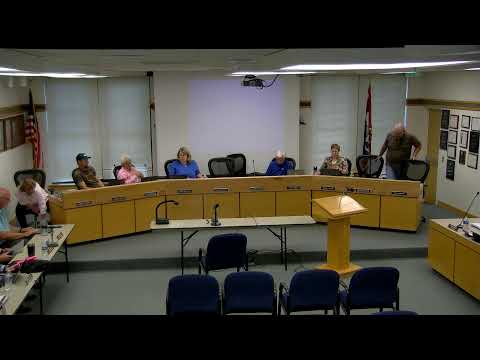
The Uinta County School District Board held a public budget hearing on July 16 and adopted the fiscal year 2025–26 budget, approved a county request to levy 28.5 mills and approved budget revisions for FY 2024–25.
Business officials told the board that state mineral-revenue accounting changes shifted amounts into an ‘‘unearned property taxes’’ classification that will begin releasing to the district’s fund balance as those receipts mature. The business manager reported that interest earnings exceeded original estimates — roughly $417,000 received versus $347,000 budgeted — and that the district expects a tax-shortfall grant of about $1,063,000 to arrive in mid‑October as a true-up for prior-year revenues.
The board voted to adopt the FY 2025–26 budget as presented. The business official summarized preliminary figures showing a projected net change in the general fund balance of about $639,000 (the document presented showed a surplus), and estimated carryover fund balance in the general fund of roughly $5.6 million once audit and remaining receipts are finalized. The business office cautioned those numbers were preliminary pending final audit adjustments and late tax receipts.
Major items highlighted in the budget presentation: - CAPCON: the district expects approximately $4,000,000 in capital-construction (CapCon) funding directed to Davisville School. - Special education placements (referred to in the meeting as CBAR V student placements) produced unusually high costs this year; the business office reported about $900,000 in high-cost special-education placements that will be reimbursed on a subsequent fiscal cycle, creating a carry‑forward requirement. - Food service: staff said the food-service fund did not require a transfer to the general fund this year, but the board included a possible transfer of $319,000 in the coming year if needed. - Employee benefit fund: the district uses an employee benefit fund as a pass-through vehicle for insurance; the presentation noted roughly $9,000,000 in pass-through activity and a separate reserve that previously parked about $650,000 for equipment replacement. - Curriculum and one‑time items: the adopted budget includes one‑time fund-balance uses for a new social-studies curriculum (estimated $237,000 of a $586,000 curriculum budget) and a $28,000 absence-management software purchase.
Board members approved a motion to authorize the county to levy 28.5 mills (a separate motion recorded in the budget hearing). The budget was adopted by voice vote.
Business staff also described state-level fiscal issues the board should monitor: (1) the state’s ongoing ‘‘recalibration’’ work that could change funding formulas and class-size allocations; (2) potential federal shifts that might reclassify or reduce Title II / Title IV federal funds; and (3) audit work underway by state auditors. The superintendent and business manager urged the board to watch recalibration discussions and be prepared to comment if changes threaten district funding or class-size protections.
The board recessed the regular meeting to conduct the budget hearing, approved the revisions and adopted the FY 2025–26 budget and then reconvened the regular session.
Votes recorded in the transcript were taken by voice; the meeting recorded motions and seconds and indicated each motion carried.