Get Full Government Meeting Transcripts, Videos, & Alerts Forever!
Get email alerts on the Cemetery Maintenance topic
No spam. Unsubscribe anytime.
City staff: Rawlins cemetery needs long-term funding, more staff and equipment
Summary
At a July 15 council work session, Rawlins staff outlined maintenance shortfalls at the city cemetery — aging equipment, reduced crew size, low fee revenue and thousands of leaning or unmarked graves — and recommended new bookkeeping, staffing and targeted projects rather than immediate policy changes.
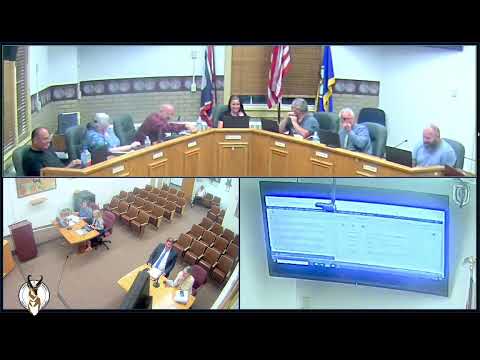
City staff told the Rawlins City Council at a July 15 work session that the municipal cemetery has deteriorated over years and will require sustained funding, more staff and a multiyear program of repairs to address headstones, turf, trees and rodent damage.
City Manager Tom Sarvey, joined by Public Works Director Cody Dill and Community Development Director Louis Moscano, presented a staff report that estimated the cemetery covers about 40 acres (25–30 acres with gravesites) and brings in roughly $19,000 a year in combined lot sales, service fees and perpetual-care payments. “The 10‑year average is about $19,000 a year,” Sarvey said. He added that the city spends more on labor and equipment for a typical burial than it collects: “When we add up the cost that the city has for a normal burial, it comes to about $981 that the city spends,” and “we are in a loss position.”
The nut graf: staff recommended cataloguing cemetery revenues separately (lot sales and perpetual‑care funds) so the city can show how those receipts fund cemetery projects, and asked council to consider dedicating additional operating funds and at least one year‑round staffer plus seasonal help to narrow the maintenance gap.
Most important details first: the parks crew that maintains public parks and the cemetery currently has four full‑time positions and limited part‑time seasonal help; together they maintain about 103 acres including parks and the cemetery, or about 20 acres per staff member per week in summer. Staff said vacancies and budget freezes in 2022–23 reduced crew capacity and that maintenance shortfalls explain much of the cemetery’s visible decline. Sarvey told council the city lacks a funded depreciation program to replace aging mowers, trucks and other equipment and that repair costs have risen because much equipment is beyond its expected life.
Staff documented specific repair needs and counts. Employees conducted a headstone inventory that found 5,902 stones; about 1,750 of those need work such as re‑leveling, topsoil replacement or contractor assistance for very large monuments. There are 41 stumps remaining from earlier removals, which staff said could be removed in one season with reliable stump‑grinding equipment. Turf problems are widespread in the cemetery, particularly in central areas where poor topsoil prevents grass growth; staff proposed a multiyear topsoil/compost program and noted that a modernized irrigation system would be needed to sustain any large‑scale turf improvements.
Staff identified wildlife damage as another recurring problem. The report cited an entrenched population of ground squirrels (Richardson ground squirrels) and isolated badger damage tied to prey activity. Staff said bait stations have reduced visible activity this season but recommended continued monitoring and that use of broadcast sprays would require temporary closures.
Unmarked and potentially occupied graves were a topic of particular concern. Staff said cemetery records include a large number of plots listed as “unknown owner”; the report estimated roughly 700 records in that category. Community Development staff said the city has encountered coffins and body bags while digging in areas without clear markers and recommended using ground‑penetrating radar or hiring a specialist to locate unmarked graves before selling or reusing plots. Staff and several council members discussed options to GPS and mark identified graves to prevent future disturbance and to make sales decisions about clearly unoccupied, documented spaces.
On records and public access, staff said the archives include deed books and earlier handwritten records dating back to the 1800s but that some records were lost in earlier fires or floods when records were held at a church. Staff proposed digitizing records and installing an on‑site kiosk under the pavilion to help residents find plots; Sarvey noted that doing so will require funding.
Options and staff recommendations given to council included: - Separately tracking cemetery lot sales and perpetual‑care receipts so purchases and equipment funded by those revenues can be visibly linked to cemetery projects; - Hiring at least one year‑round cemetery staffer and increasing seasonal help in summer, with a goal of adding one permanent and one summer staff member as an initial step; - Considering limited contracting to catch up on heavy or specialized tasks (headstone reset, large tree removal) versus training and equipping city crews for some services; - Buying or renting specialized equipment (ground‑penetrating radar, stump grinder) or hiring firms to provide one‑time surveys/projects; - Developing a multiyear plan for topsoil, irrigation modernization and tree replacement (staff suggested planting 10–20 mature trees per year as realistic) and creating a clear maintenance standard and community vision for the cemetery.
Council members pressed staff on details. Councilwoman Lee Mancasa and others asked for counts of trees and open lots; staff said the tree inventory is still in progress and that the majority of vacant lots are in newer Murray/Colorado sections. Council member Darren Elliott and others raised the idea of a cemetery improvement district like nearby towns use to secure funding; staff said forming a district would be a longer county‑ballot process. Patty Benson, a local resident, urged the council to act, saying the cemetery’s condition is “awful” and stressing the emotional impact on families.
The presentation did not include a motion or vote; staff framed the report as information and asked council for direction on funding, staffing and priorities. Sarvey recommended starting earlier budget work sessions this fall so council and staff can consider cemetery investments during next year’s budget cycle. “If counsel and staff want to improve the conditions of the cemetery, we need to find a way to invest into it,” Sarvey said. He added that staff plans to return with budget proposals and project recommendations.
Ending: Council did not take formal action at the July 15 meeting. Staff said they would supply additional counts (trees, open lots), follow up on the tree‑donation program idea, provide options for separating cemetery revenues in city accounts, and present budget or ordinance changes to the council for future consideration.