Get Full Government Meeting Transcripts, Videos, & Alerts Forever!
Get email alerts on the Missoula Airport Infrastructure topic
No spam. Unsubscribe anytime.
Missoula Airport to close to fixed‑wing traffic for 127‑hour runway rehab as $127 million terminal project nears completion
Summary
Missoula Montana Airport will temporarily close to fixed‑wing aircraft for about 127 hours in September to overlay its primary runway and replace approach lighting, airport officials said at City Club Missoula. The runway rehab is part of separate work from a nearly completed $127 million terminal expansion funded by airport revenues.
Missoula Montana Airport will be closed to all fixed‑wing aircraft for roughly 127 hours in September so crews can overlay the airport’s primary runway, replace approach lighting and perform other repairs, Tim Damro, deputy director of the Missoula County Airport Authority, said at City Club Missoula’s July forum.
The closure will allow crews to apply a three‑inch asphalt overlay, replace about 335 lights with LEDs, upgrade the approach lighting system to improve instrument approaches in fog, and perform deep maintenance across the newly opened terminal, Damro said. “There’s never a good time to shut down kind of our access to the outside world,” he said, but the airport opted for a single continuous closure to avoid “cold joints” and to produce a longer‑lasting pavement surface.
The runway rehabilitation project budget is about $20,000,000, covered primarily by federal discretionary funding from the Federal Aviation Administration (FAA) with a small airport match, Damro said. Separately, the airport’s multi‑phase terminal expansion has a total project budget of about $127,000,000. Damro said the terminal work has been funded with airport revenues and that Phase 3 (additional gates, concessions and final finishes) is due to wrap up in September, with some concessions opening in August.
Why it matters: the closure will temporarily move commercial operations and many aircraft to neighboring airports and could affect travel during the work window. The rehab is the first major runway overlay since 2008, and airport leaders said the timing was advanced to match available FAA discretionary funds.
Details and local impacts
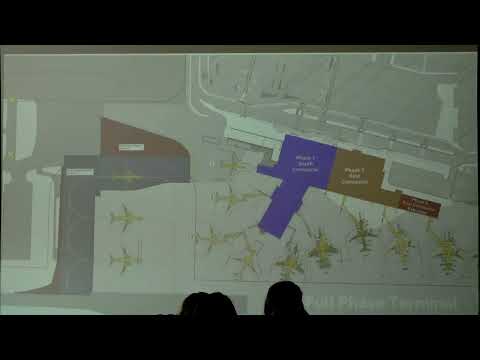
Damro said the terminal expansion adds baggage claim capacity, new gates and an observation level; once the final phase is complete the airport can serve up to nine overnight aircraft versus three under the old configuration. The project also added a larger baggage claim, relocated rental car counters back inside the terminal, expanded deicing capability to reduce winter delays, and produced a building that airport staff say is designed to be sensory‑inclusive; Damro said the airport is sensory inclusive certified and staff are trained to assist travelers with hidden disabilities.
The airport will reconfigure parking used during construction to create roughly 300 additional spaces across economy, long‑term and premium options; Damro said economy parking will be priced at $8 per day. Concession openings planned for August will include a local coffee brand and a bar featuring multiple local craft beers, he added.
Operations and contingency planning
During the runway closure the airport will be closed to fixed‑wing aircraft; rotor‑wing operations such as Life Flight helicopters and firefighting helicopters will still be permitted, Damro said. He described coordination with airline partners and community stakeholders and said carriers will be asked to relocate to nearby airports during the closure window. “We will be closed to all fixed wing aircraft,” Damro said. He noted crews will work 24 hours a day during the closure to complete paving and striping as quickly as possible.
Master planning and future runways
In response to an audience question, Damro said the airport’s most recent master plan is complete and publicly posted; the process included evaluation of the crosswind runway and a possible parallel runway. He said the crosswind runway was recommended for decommissioning because changing wind patterns made it ineligible for federal funding. A previously studied parallel runway has been moved closer to the existing tower in the current plan so it would be practical for taxi operations and provide relief for general aviation without mixing with commercial traffic.
What officials said
Tim Damro, deputy director, Missoula County Airport Authority: “There’s never a good time to shut down kind of our access to the outside world, but we did try to work with everyone as best we could.”
Audience questions
At the forum, audience members asked about contingency planning for emergency or firefighting flights and whether the airport expansion would attract more airlines and lower fares. Damro said helicopters would still be accommodated and that the larger terminal and additional overnight parking capacity give the airport more options to recruit additional airline frequency. He also noted the airport recently secured a small community air service grant for year‑round service to Chicago.
Ending
Airport officials said they chose a single continuous closure to produce a higher‑quality pavement result and reduce long‑term maintenance. Travelers and local partners should expect a temporary shift of fixed‑wing operations during the September closure and can find updates and detailed schedules on the airport’s website as the date approaches.