
Commissioners approve phased cuts to recurring nonprofit funding, sparking debate over timing and exemptions
Get AI-powered insights, summaries, and transcripts
Subscribe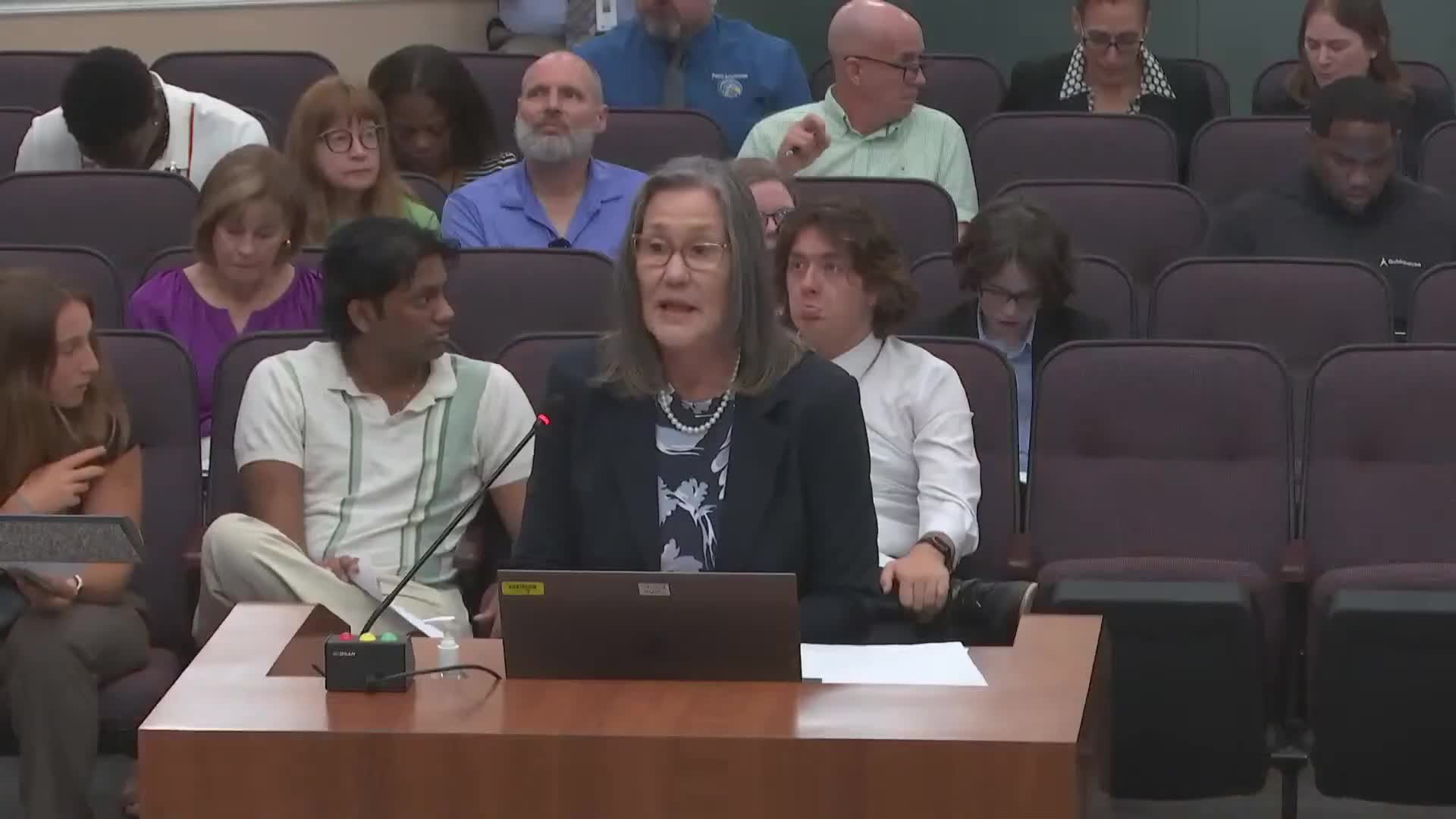
Summary
The board voted 5–2 to adopt revisions to nonprofit funding guidelines that phase down recurring general‑fund grants over several years. Supporters said the change improves transparency and reduces long‑running commitments; critics said the schedule could harm organizations that rely on the funding and urged slower implementation.
Commissioner Chris Bowles proposed and the Board of County Commissioners approved a revision to the county’s nonprofit funding guidelines on July 16 that phases down a portion of recurring general‑fund grants over several fiscal years. Bowles framed the package as an effort "in the spirit of openness and transparency" to reduce long‑standing, recurring commitments and to reallocate limited taxpayer dollars.
The adopted policy directs a step‑down (off‑ramp) of certain recurring allocations and requires stronger documentation for future recurring awards. Bowles presented an illustrative step‑down table showing an example reduction from roughly $8.9 million in recurring allocations to about $6.66 million in FY 2026, then to roughly $3.3 million and then $835,000 in subsequent years under one scenario; he described the numbers as illustrative of a gradual approach rather than a single, immediate cut.
The proposal drew sharp debate. Commissioner Gwen Myers and Commissioner Christine Cohen voted no. Critics argued the changes could force nonprofits to absorb sudden budget shortfalls and recommended a slower phase‑in or a start date in FY 2027 to allow organizations time to adapt. Commissioner Bowles said the revision preserves the board’s authority to flag and approve targeted nonrecurring funding each year and emphasized the opportunity for commissioners to supplement critical providers from their own allocations during the transition.
Several commissioners also urged staff to provide clarity on organizations that perform core governmental functions or are part of established county programs. Commissioners discussed, for example, the county’s past large one‑time investments (such as capital support to Feeding Tampa Bay) and noted those would remain subject to board discretion and separate approvals.
The motion passed 5–2; the minutes record, "Motion carried 5 to 2. Commissioners Cohen and Myers voted no." The policy change directs staff to apply the new approval and documentation standards and to return with implementation steps and lists of currently recurring recipients for board review and future budget cycles.
The board majority described the action as a first step toward more transparent and accountable nonprofit funding; opponents asked for additional transition time and for staff to identify technical assistance or mandatory fiscal trainings to help smaller nonprofits adapt to the changes.