Get Full Government Meeting Transcripts, Videos, & Alerts Forever!
Get email alerts on the Energy Infrastructure topic
No spam. Unsubscribe anytime.
Council schedules public hearing on proposed battery‑storage rezoning near wastewater plant
Summary
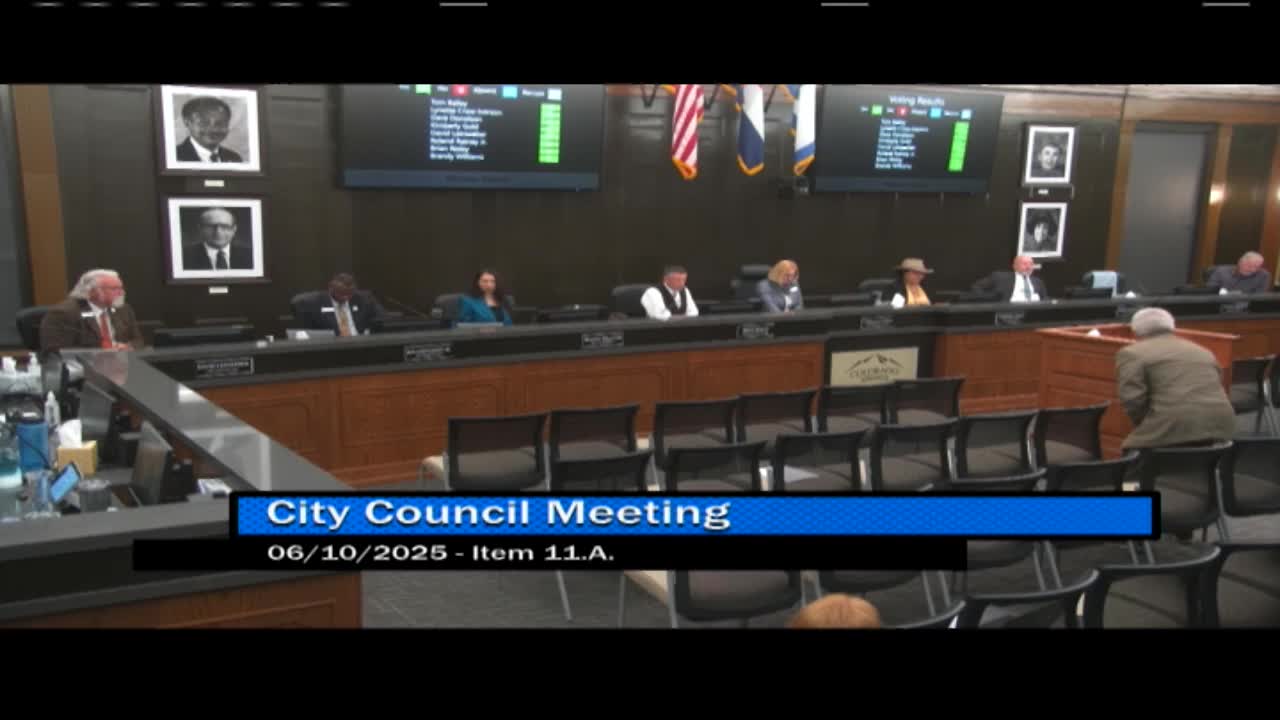
On June 10 the council approved a first reading to set a June 24 public hearing for a proposed rezoning of 6.18 acres at 1133 South Royer Street to a plan‑development district for a large non‑residential project (proponent identified as private battery storage); the motion passed 7-1.
The Colorado Springs City Council on June 10 set a public hearing for June 24 to consider an ordinance that would amend the zoning map for 6.18 acres at 1133 South Royer Street from General Industrial (GI) to a Plan Development non‑residential district with a maximum of 180,000 square feet and an 80‑foot maximum building height.
City Planning Director Kevin Walker identified the site as adjacent to Las Vegas Street and across from the wastewater treatment facility. Council discussion flagged that the proposal is for a privately owned battery storage project; Councilman Donaldson noted the proposal represents a significant project type for the city and asked for citizens to be made aware. Walker and staff did not provide megawatt capacity at the first‑reading stage; Donaldson said details such as storage size would be addressed at the public hearing.
Council voted 7‑1 to set the June 24 public hearing date. The first reading establishes the process for a formal public hearing and subsequent council consideration of the zoning map amendment and any detailed site plans and environmental or technical analyses submitted by the applicant.
Council members were advised the public hearing will be the venue to review project specifics, including technical details, project scale in megawatts, safety and interconnection issues, and any required environmental or infrastructure studies. The council’s June 24 hearing will determine whether to advance the ordinance to later readings and final action.