
Snoqualmie Valley previews mostly balanced 2025–26 budget; preschool expansion, transportation and staff changes highlighted
Get AI-powered insights, summaries, and transcripts
Subscribe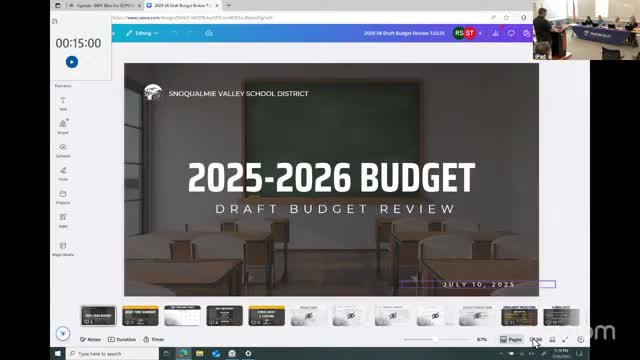
Summary
District finance staff told the board July 10 that the general fund is roughly balanced in the proposed 2025–26 budget, with capacity for $4.2 million in contingency, added preschool classes and more bus drivers; the board will consider formal adoption on Aug. 14.
Snoqualmie Valley School District finance staff told the Board of Directors on July 10 that the draft 2025–26 budget is largely balanced and includes planned preschool expansion, additional transportation staffing and modest certificated and classified staffing increases.
The district presenter said the budget presented to the board is “probably 90% there” and that staff will continue refining numbers before the board’s formal budget adoption on Aug. 14. Key items highlighted included a planned expansion of preschool (additional classrooms and related paraeducators), the hiring of more bus drivers, a budget capacity line of $4,200,000 and an operating fund balance that the presenter said keeps the district within its target range.
On enrollment and staffing, the presenter said kindergarten enrollment came in a bit lower than anticipated and the budget assumes a conservative kindergarten estimate of about 430 students unless summer moves alter that count. The presenter said elementary enrollment is declining overall while middle‑school enrollment shows a temporary increase, and that the district is shifting some staffing toward preschool and middle/high school growth. The budget includes additional deans of students in some elementary buildings and an associate director for safety; the presenter said that change is largely cost‑neutral because a previous specialist position was not refilled.
The presentation laid out several revenue and expenditure drivers: a roughly 3.6% increase in combined state general and special education funding as reported by staff, a 2.5% inflation/employee cost index for salary assumptions, and increases in local non‑tax revenue tied to preschool tuition and stronger interest and rental income. Federal grant revenue is expected to decline slightly under new rules, the presenter said.
On benefits and pension costs the presenter said district employer pension contribution rates reported by the state have fallen significantly for next year — the presenter cited a roughly 21% drop in teacher pension contributions and a roughly 36% drop for classified staff — while medical and paid‑family‑leave costs (SEBB) are increasing by double digits. The presenter cautioned that the pension reductions may not be permanent.
Transportation and capital items were also discussed. The presenter said the district has hired more bus drivers and expects to add several more buses; when asked about average cost, a staff member replied “250, I think,” and the presenter noted depreciation schedules vary by bus type (about 10–14 years depending on vehicle). The transportation vehicle fund and capital projects budgets include capacity for vehicle replacements and tech levy equipment, but the presenter said large capital expenditures would normally be brought back to the board for approval.
On debt and capital finance, the presenter reminded the board that a recent refunding will save the district about $1 million in interest over the next nine years. The presenter said debt service and capital projects figures include budget capacity for remaining work from prior bond projects and potential early design work if future bond measures move forward.
The presenter said the district’s general fund balance is healthy — the presentation cited a fund balance target of roughly 12% and noted a current fund balance around $16 million — and that the budget the board will vote on in August will show the legally required appropriation lines. Staff also said they will produce a four‑year projection for the board before adoption.
Board members asked clarifying questions about transportation efficiencies, associated student body (ASB) fund balances, and travel budgets; staff explained some ASB activity budgets plan a beginning fund balance and that school ASBs typically draw on that balance for activities rather than preserving it. No formal budget adoption occurred at the July 10 meeting; the board will consider the appropriation resolution at the Aug. 14 meeting.