Get Full Government Meeting Transcripts, Videos, & Alerts Forever!
Get email alerts on the Municipal Grocery Tax topic
No spam. Unsubscribe anytime.
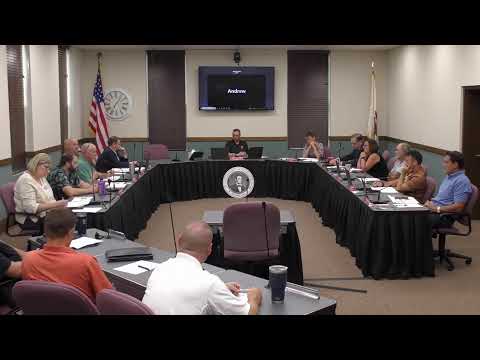
Lincoln council considers keeping 1% municipal grocery tax; city could lose about $530,000 if it lets it expire
Summary
City attorney and finance staff told the Committee of the Whole the council must adopt an ordinance by Oct. 1 to retain a 1% grocery retailers tax that the state allowed municipalities to keep; council placed the ordinance on the regular agenda.
The City of Lincoln Committee of the Whole discussed whether to retain a 1% municipal grocery retailers occupation tax that Illinois law allows municipalities to keep if they adopt a local ordinance. City Attorney Hovlett and a city finance official said keeping the tax will preserve roughly $530,000 a year in local revenue; the ordinance must be filed with the state by Oct. 1 to retain the tax beyond Jan. 1, 2026.
City Attorney Hovlett told the council that the Illinois legislature enacted a change that would remove the 1% grocery tax statewide unless municipalities act to retain it locally. He said many Illinois municipalities are voting to retain the tax. Finance staff estimated the city would lose about $530,000 if it does not adopt the ordinance.
Mayor and council members debated the policy and distributional effects. Alderman Bateman and Alderman Anderson said residents the speaker consulted favored retaining the tax and noted that much of the grocery spending is by visitors and out-of-town shoppers as well as city residents. Alderman Clemens said he opposed retaining the tax, saying citizens need tax relief. Alderman O'Donohue noted nonresidents who shop in Lincoln also pay the tax. City staff clarified the tax applies primarily to packaged grocery items sold at grocery, convenience and similar retailers; prepared-food sales at restaurants and bars are taxed under different rates and treatment.
The council did not vote on the ordinance at the meeting; members directed staff to place the ordinance implementing the municipal grocery retailers and grocery service occupation taxes on the regular agenda for a future meeting so council members can act before the Oct. 1 notice deadline.
If the council declines to retain the tax, city staff warned budget cuts or other offsets would be required because the tax is an established revenue source in the city's fiscal plan.