Get Full Government Meeting Transcripts, Videos, & Alerts Forever!
Get email alerts on the Housing Affordability topic
No spam. Unsubscribe anytime.
Council approves $60 million in bonds for Royal Pines apartments despite neighborhood opposition
Summary
City Council approved the issuance of up to $60 million in multifamily housing revenue bonds for the Royal Pine Apartments after extended public comment focused on traffic, parking, school capacity and site suitability; the ordinance passed 8–1.
The Colorado Springs City Council on Tuesday approved an ordinance authorizing up to $60 million in multifamily housing revenue bonds to finance the Royal Pine Apartments, a 232-unit development in Council District 2, by an 8–1 vote.
The ordinance authorizes private activity tax-exempt bonds and a taxable tail to fund acquisition, construction and certain issuance costs for the project. City housing staff and bond counsel told council the project had previously received land-use approvals and that bond investors had signaled they were willing to proceed despite pending litigation affecting other local projects.
Why it matters: The project drew sustained public opposition at the meeting, with multiple citizens citing concerns about parking, traffic, proximity to wildlife open space, limited transit access and pressure on already crowded schools. Opponents urged the council to delay or deny approval until market and legal uncertainties are resolved.
During the public-comment period residents living near the project compared marketing materials to on-the-ground conditions at a nearby development owned by the same developer, raising photographs of sparse and poorly maintained amenities and concerns about crime, vehicle break-ins and inadequate on-site facilities. "This is a Great Dane trying to lie in a chihuahua bed," said one neighbor describing the mismatch between the site and the scale of the proposed project.
City staff said entitlements and land-use approvals are complete and that the bond financing approval is the final municipal authorization required before the developer proceeds. Staff noted investors evaluate risk and will invest “at their own risk,” and that the development team had provided documentation investors were prepared to move forward.
Council members who supported the ordinance said the units will provide housing at income tiers targeted to 60–70% of area median income and that the project is consistent with the city’s mixed-use zoning and PlanCOS direction for increased housing in appropriate corridors. Opponents cited school crowding, evacuation concerns, and a lack of nearby transit. One council member urged colleagues to "go slow" and consider neighborhood trust, while another emphasized that affordable housing can benefit teachers and other middle-income workers.
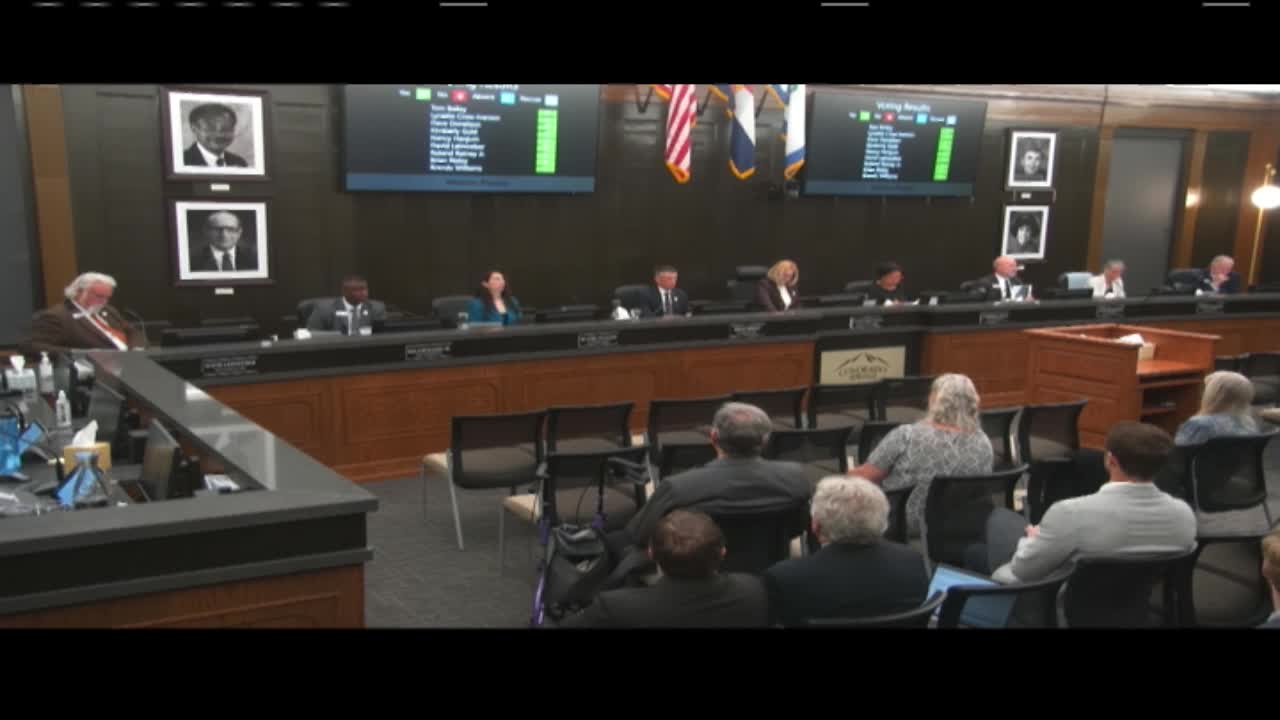
Following public comment and council debate, the motion to approve the bond ordinance carried 8–1.
Ending: The bond authorization allows the project to proceed; details of construction timing, parking management and mitigation measures will be handled through project implementation and by the developer as the project moves forward.