
Maslow Project tells Medford council it served 1,116 homeless youth and families in 2023‑24; agency highlights school‑based supports and housing placements
Get AI-powered insights, summaries, and transcripts
Subscribe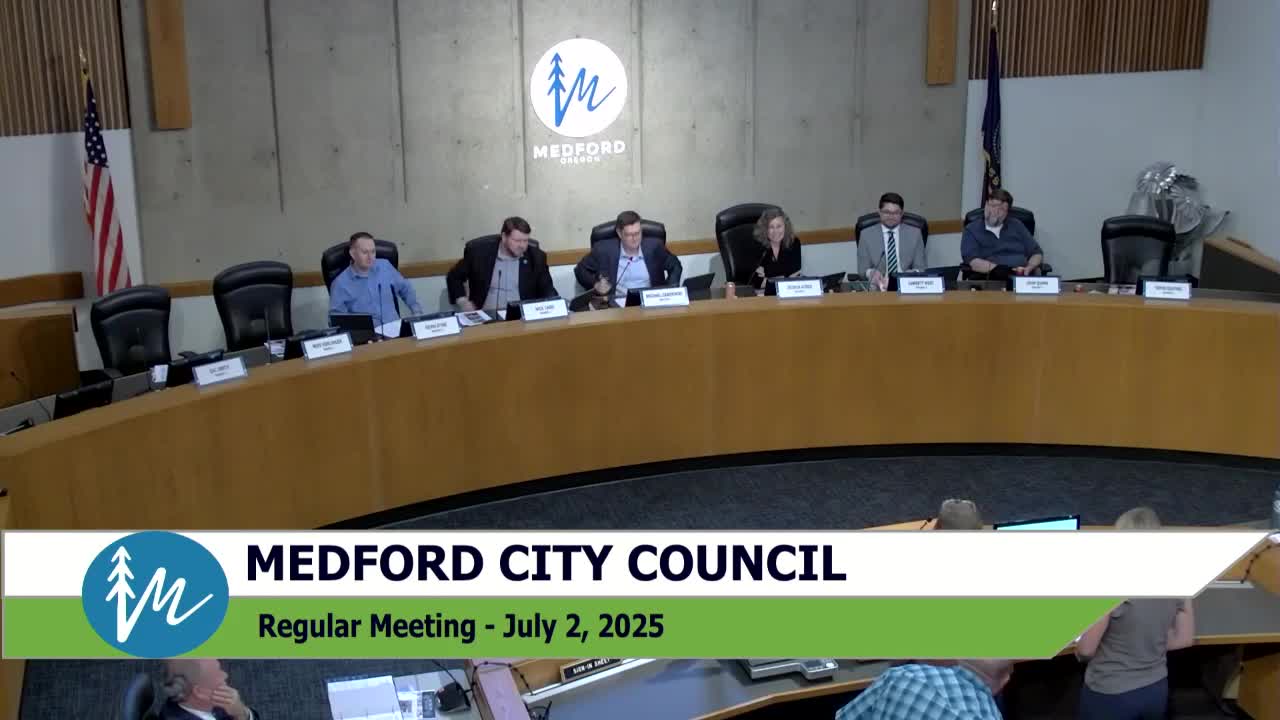
Summary
Maslow Project representatives briefed the council on services for youth experiencing homelessness in Jackson and Josephine counties, reporting 1,116 unduplicated people served in Medford during the 2023–24 program year and a 91% on‑time high school graduation rate for their seniors.
Maslow Project staff told the Medford City Council on July 2 that the nonprofit served 1,116 homeless youth and families in Medford during the 2023–24 program year and that 91% of their seniors graduated on time.
"In Medford, specifically, in the 2324 school year, which aligns with our program year, we served 1,116 homeless youth and families in Medford," Mary Farrell, Maslow Project founder and executive director, said during the presentation. Farrell said the agency serves people from birth through age 24 and partners with schools to remove barriers to education.
Program directors Cheyenne Nichols and Matt Northrop described school‑based case management, transportation assistance, basic‑needs distribution, and housing navigation. Nichols summarized a case in which Maslow arranged bus transport from multiple nightly locations so a student could attend school and said outreach and case management helped raise attendance and academic outcomes.
Northrop described the Medford Resource Center, located in the former Medford School District administration building, which provides triage, case management, coordinated entry assessments, a food pantry, clothing closet, mail services and referrals. He said Maslow used Community Development Block Grant funding to support the resource center and that the agency case‑managed 20 new apartment units with the Housing Authority of Jackson County this year.
Councilors asked for longer‑term outcome data and cost‑effectiveness analysis. Farrell said Maslow’s on‑time graduation rate typically ranges from the mid‑80s to low‑90s; she noted last year's rate was 86% and the prior year 92%, and that Oregon’s statewide average for students experiencing homelessness is about 60%.
Farrell also said Maslow accepts donations of food, hygiene supplies, new clothing and camping supplies and asked the council for continued support. City staff confirmed Maslow is a current city CDBG and ARP funding recipient; Maslow representatives said funding has been continuous since an initial 2008 city grant.
Councilors requested additional materials on prevention outcomes and cost metrics; staff and Maslow said they would provide follow‑up analysis.
Maslow Project representatives present: Mary Farrell (executive director), Cheyenne Nichols (program director) and Matt Northrop (program director).