Get Full Government Meeting Transcripts, Videos, & Alerts Forever!
Get email alerts on the Transient Lodging Tax topic
No spam. Unsubscribe anytime.
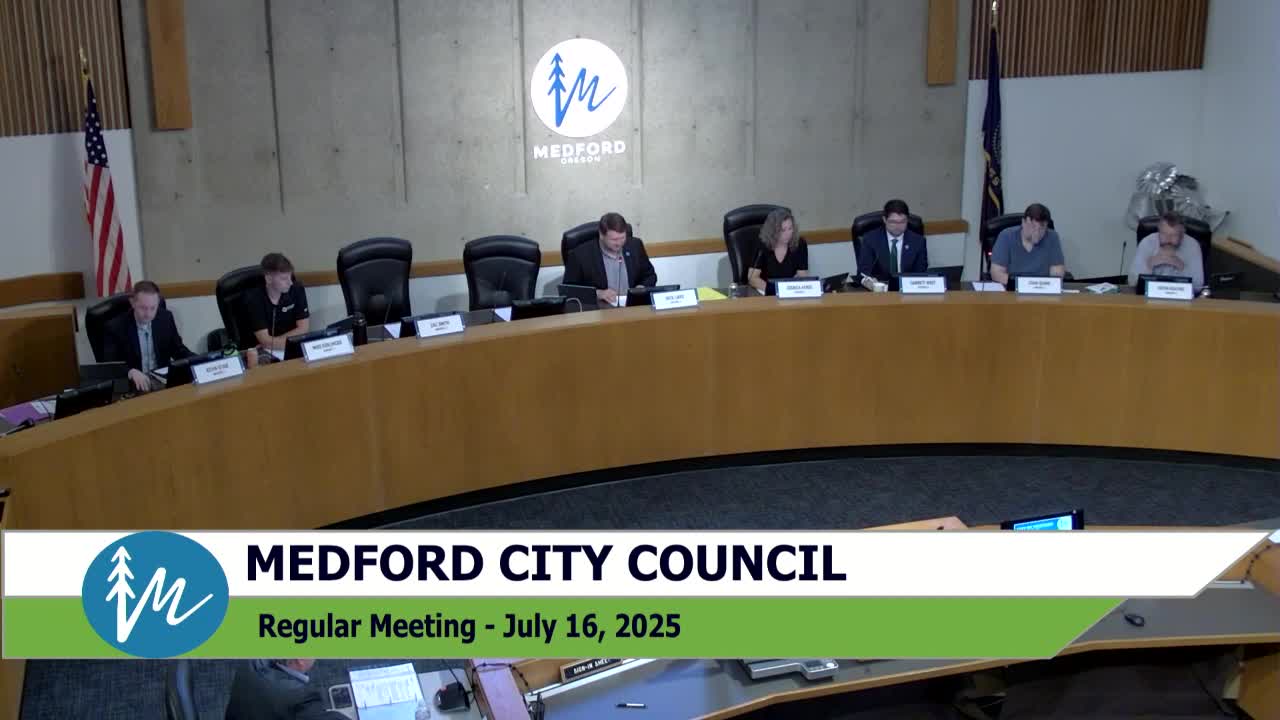
Medford council refers 2% transit‑lodging tax increase to November ballot, directs staff to draft sideboards
Summary
The City Council voted to put a charter amendment on the Nov. ballot to raise the city's transient lodging tax maximum from 11% to 13% and instructed staff to prepare sideboard language including a potential 1% increase, sunset and district options for later council consideration.
The Medford City Council voted Wednesday to refer a measure to the Nov. 2025 ballot that would allow the city's maximum transient lodging tax (TLT) rate to rise from 11% to 13% and directed staff to draft limits and conditions for any future increase. The referral won unanimous support from the eight councilors present. Council also approved a second motion directing staff to prepare sideboard language that would assume a 1% increase if voters approve the charter change, include a sunset and restrictions on using proceeds for a conference center or similar facilities, and study whether a district or differential TLT rate is feasible. Why it matters: Councilors said the change would enable the city to pursue a potential public–private redevelopment concept dubbed the Creekside Quarter, a large downtown proposal that could include a conference center, hotel, park and stadium. Supporters argued TLT is paid by visitors and therefore is an appropriate funding source for projects that draw outside revenue; opponents and some hoteliers have said they want sideboards defined before any permanent rate change. City attorney Eric Mitten told the council the item before them changes only the charter maximum and does not itself change the local tax rate: "This is exceedingly preliminary," he said, adding that any actual rate, exemptions, or sideboards would be set in the municipal code and could be developed and returned to council for approval. Garrett West, who supported the referral, said the explanatory statement in the agenda packet had been revised for clarity and that the council should use the version prepared by Councilor West. What council did: Council passed Resolution 2025-066 (title on ballot language) and then approved a motion directing staff to draft sideboard language and schedule a study session. The roll call on the referral resolution was 8–0 in favor. The roll call on the motion directing staff was likewise 8–0. Key details from the meeting record: - The item was introduced by City Attorney Eric Mitten, who explained the difference between changing the charter maximum and changing the municipal code that sets the actual rate and exemptions. (Mitten, staff report) - Councilor Nick Card and others asked whether emergency or government‑funded lodging for people in crisis (for example, domestic‑violence or fire victims) might be exempt; Mitten said existing exemptions include stays longer than 27 days and that additional exemptions could be added in the municipal code and would require further work. (Mitten, Councilor Card) - Councilors emphasized hotelier engagement; several said hoteliers should be part of crafting sideboards and that the council would not assume an immediate 2% increase without further decisions. Votes and motions: - Motion: Adopt resolution to submit charter amendment raising the maximum transient lodging tax rate from 11% to 13% to the voters at the Nov. election. Outcome: Passed by roll call vote 8–0. (Resolution: Council Bill 2025-66) - Motion: Direct staff to draft sideboard language assuming a 1% increase if the measure passes, include a sunset and restrictions on use for a conference center or similar facility, investigate district/differential rate options, and schedule a study session. Outcome: Passed by roll call vote 8–0. What happens next: Staff will draft code and sideboard language for council review, beginning with a study session in August to refine exemptions, sunsets and any district‑rate options. If voters approve the ballot question in November, council will return to adopt the municipal‑code changes that set actual rates, exemptions and program rules. Speakers quoted in this article appear in the speaker list below and are cited exactly as they spoke at the meeting.