Get Full Government Meeting Transcripts, Videos, & Alerts Forever!
Get email alerts on the Police Involved Deaths topic
No spam. Unsubscribe anytime.
Community presses council for immediate action after three police-involved deaths; council schedules fuller review
Summary
At a Public Safety Committee hearing, community members and oversight chairs urged faster responses to police-involved fatalities and better crisis response for behavioral-health incidents. Council leaders acknowledged the concern and said a broader committee-of-the-whole hearing is being planned to examine the recent deaths and related systems.
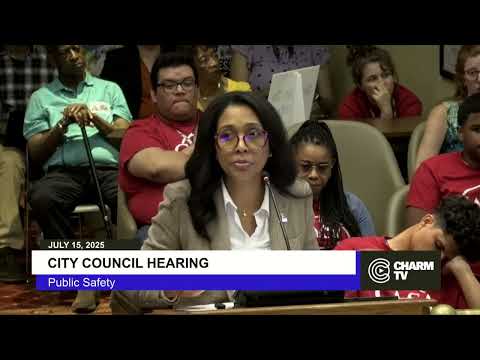
Baltimore — Public comment at a City Council Public Safety Committee hearing on police accountability turned to three recent police-involved deaths that have increased public pressure for immediate reform and improved behavioral-health responses.
Council Chair Mark Conway opened the hearing noting that three city residents — identified in committee remarks as Mr. Abdullah, Ms. Clark Brooks and Mr. Milton — died in encounters with police and that a separate investigation is under way by the Baltimore Police Department’s Special Investigations Response Team and the Maryland attorney general’s office. Conway said the city “mourn[s] those loss(es) and we pray for the wounded officer,” and emphasized the hearing’s focus on systemic investigatory processes while acknowledging that another hearing will address crisis responses and behavioral-health interventions in detail.
Public testimony voiced urgent concern about the handling of mental health crises and repeated contacts between police and the individuals who later died. Several community speakers described repeated 911 responses to the same addresses without apparent alternative crisis resources being deployed. Nadine Page, a West Baltimore resident, pointed to a nearby mayoral office of neighborhood safety, a stabilization center and the Turk House and asked why those community resources were not used earlier. “We have a stabilization center. We have the Turk House. 20 times, someone could have reached out to these organizations to get her some help,” Page said.
Advocates asked for rapid, public reviews and stronger systems for diversion from arrest to mental-health supports. Chrysalis De Los Santos of CASA Baltimore, a former PAB member, said civilian oversight needs independent investigatory resources and legal counsel to act effectively. “Without real independence there was so little that the police accountability board could do without their own access to legal support and also the power to conduct their independent investigation,” she told the committee.
Other speakers appealed for immediate accountability and for the council to convene a broader hearing. Multiple public speakers expressed frustration that the deaths happened within days of each other and asked why city resources were not mobilized to prevent fatal outcomes. The committee chair acknowledged the public concern and said the council president is organizing a committee-of-the-whole hearing to examine the recent shootings and deaths with the participation of all council members.
Witnesses and speakers also linked the events to larger systemic problems: data gaps that prevent tracking repeated contacts with individuals, limited civilian subpoena and investigatory authority, and ACC/PAB resourcing shortfalls that delay investigations. Several community members framed the issue as both a policing and a city‑services failure: repeated calls to the same addresses, they said, should trigger multi-agency interventions rather than repeated enforcement encounters.
No formal action was recorded at the hearing on these fatalities; committee members said they would pursue a separate, broader hearing and further community engagement. Conway closed by promising continued oversight and by asking staff to coordinate the fuller review.