Get Full Government Meeting Transcripts, Videos, & Alerts Forever!
Get email alerts on the Opioid Restitution Fund topic
No spam. Unsubscribe anytime.
Baltimore council committee reviews opioid restitution spending, community groups press for more CBO funding after Penn North overdoses
Summary
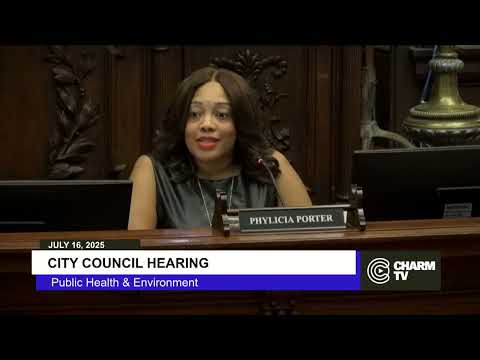
At a Baltimore City Council Public Health and Environment Committee oversight hearing, council members, city attorneys and community providers reviewed how the city is allocating opioid restitution funds and discussed the city’s response to a Penn North overdose cluster that hospitalized 27 residents.
At a Baltimore City Council Public Health and Environment Committee oversight hearing, council members, city attorneys and community providers reviewed how the city is allocating opioid restitution funds and discussed the city’s response to a Penn North overdose cluster that hospitalized 27 residents.
The hearing focused on the city’s newly established opioid restitution fund (ORF), the litigation that produced the settlements, budget accounting for the money, and repeated calls from community‑based organizations (CBOs) for more direct, sustained funding and clearer transparency mechanisms.
The ORF was established by Mayor Scott’s August 29, 2024, executive order as a separate trust intended to sustain investments for at least 15 years, Executive Director Sarah Whaley of the Office of Overdose Response told the committee. Sarah Gross, chief of affirmative litigation in the Baltimore City Department of Law, summarized the city’s multi‑year litigation, noting jury awards and subsequent court orders that affect the city’s final recoveries.
Community providers described services already operating and the need to scale them. Deborah Agus, executive director of the Behavioral Health Leadership Institute (BHLI), said BHLI’s Project Connections at Reentry (PCARE) van provides low‑barrier medication for opioid use disorder outside the Baltimore City jail and to unhoused people nearby. Agus said the program has served 3,080 unique individuals and recorded about 56,000 patient interactions since it began. “When you build it, they will come,” she said, and asked the city for additional operating funds so the van and outreach team can expand hours and staff.
Dave Fell, outreach manager at BHLI, described recent barriers clients faced after a surge of overdoses in Penn North and urged funding for longer hours, additional peer outreach workers, and more jail‑based outreach that links people to treatment on release. Vin McCormick, executive director of New Life Recovery Center, and other CBO speakers urged regular, on‑the‑ground services in affected neighborhoods rather than intermittent assistance tied to media attention.
Several witnesses urged the council to shift more ORF resources to community organizations. Darcy Kerwin Garber of Baltimore Harm Reduction Coalition emphasized transparency about how ORF awards are decided and urged that recommendations from the Restitution Advisory Board — which includes people with lived experience — be taken seriously. Candy Curry of Baltimore Harm Reduction Coalition and Bridges Coalition for Overdose Prevention Centers said the city should use the settlement money more “generously” to reduce competition between CBOs and preserve trusted local relationships in neighborhoods like Penn North.
Sarah Gross briefed the committee on the litigation timeline: after years of local case preparation and parallel national settlements, Baltimore pursued a local trial focused on public nuisance claims against manufacturers and distributors. A jury returned a verdict against two remaining defendants for $266 million; the judge later ordered a remittitur that reduced that figure to about $52 million, a decision that left the city with choices about accepting the reduction or seeking a new trial. Gross said those post‑trial decisions and remaining bankruptcy‑related settlements (including any city share of a Purdue/Sackler settlement) are still unresolved and affect future ORF receipts.
Finance staff reported current cash and appropriations. City Budget Director Laura Larson said the city has recorded roughly $236.8 million in ORF revenues to date and that the council has already appropriated about $51.4 million (a $14.6 million supplemental appropriation and $36.7 million in the FY26 budget). Larson said actual spending in FY25 was limited (about $530,000) largely because of timing and that the funds are held in a special revenue account that rolls forward year to year. The administration is also pursuing an investment strategy for the ORF trust to extend the fund’s life over the planned 15‑year horizon.
The mayor’s Office of Recovery Programs described how the city will implement and oversee grants funded by the ORF. Acting Director Elizabeth Tatum said there are 22 “named” programs in settlement agreements totaling about $87 million in multiyear grants; those awards were part of confidential settlement terms and are being moved through grant agreements and the board of estimates. Tatum said eight named organizations have reached the grant‑agreement stage and 10 remain in application review; four have requested delayed starts.
Tatum described grant‑management requirements: risk assessments, scopes of work, fiscal controls, quarterly performance reports and site visits. She said the office is using lessons from the city’s American Rescue Plan oversight and coordinating with the Baltimore City Health Department, the fire department, homeless services and other agencies to avoid duplication. A public RFP process for additional competitive ORF grants — overseen by the Restitution Advisory Board — is expected to be released in early fall, Whaley said, with the board recommending awards to the mayor.
Council members and community witnesses pressed for greater clarity and local input. Chairwoman Felicia Porter said the committee will work with the administration to develop a public‑facing toolkit and outreach plan and requested that staff publish a dashboard and other transparency materials; Councilman John Bullock and others asked for neighborhood‑level briefings. Councilmembers requested a Penn North subcabinet and more detailed mapping of service locations and outcomes by ZIP code and other demographics.
The administration outlined planned public transparency tools: a publicly accessible dashboard that will list funded programs and status, an annual ORF report, and periodic evaluations. The Baltimore City Health Department maintains an epidemiological dashboard for overdose indicators; Whaley said ORF dashboards will be coordinated with that data flow.
No formal council votes or ordinance changes were taken at the hearing. Committee and administration leaders closed by emphasizing continued oversight and community engagement as the city moves from settlement receipts to multi‑year spending.
Next steps the committee requested: a timeline and briefing materials that itemize confirmed and potential ORF receipts, an early‑fall public RFP for competitive grants (about $2 million set aside for the restitution advisory board’s grant process in FY26), a public dashboard draft, and a neighborhood‑specific planning meeting for Penn North to align housing, harm reduction and other investments.