
Neighbors and fire marshal flag possible fire hazard at bank‑owned Deerfield property; city solicitor to seek inspections
Get AI-powered insights, summaries, and transcripts
Subscribe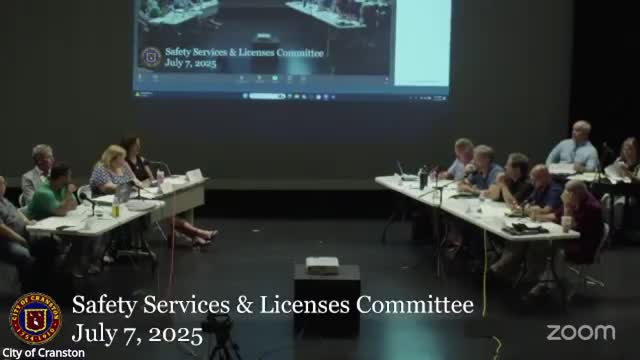
Summary
Neighbors and the Cranston City deputy fire marshal told the committee on July 7 that a vacant, bank‑owned house at 43 Deerfield has overgrown vegetation and debris near chimneys and vinyl siding, creating a possible fire hazard.
Neighbors and the Cranston City deputy fire marshal told the Safety Services Committee on July 7 that a vacant, bank-owned house at 43 Deerfield presents a possible fire hazard and a long-term property‑maintenance nuisance.
Sandra Potter, the neighbor who raised the issue, told the committee she lives directly behind the property and described overgrown trees and a layer of leaves and debris against the home’s vinyl siding and stone patio. “We are concerned because the property looks so unkempt and unlived in, that somebody could decide to go in the back and have a cigarette. And there's enough tinder there,” Potter said.
Deputy Chief Fire Marshal Granson told the committee he inspected the property before the weekend and again the day of the meeting. He said the immediate risk was lower in summer because heating appliances were not in use, but he highlighted combustible leaves and vegetation around the base of the house as a common cause of accidental exterior fires. “...the whole perimeter of that house, which is vinyl sided, has quite a bit of old leaves around the base of it, which could definitely be a problem,” Granson said.
Committee members and the city solicitor discussed enforcement options. The solicitor said the city’s current ordinances allow action for neglected premises (citations and cleanup) but do not specifically require homeowners to trim trees or remove branches; she advised that inspectors must determine whether existing municipal code provisions apply. The solicitor told the committee she would contact the inspections division and coordinate next steps.
The committee recorded several near-term directions: inspections and code enforcement will visit the property to determine whether it meets criteria for citation under the city’s neglected‑premises rules; the fire department will be included to assess potential fire hazards; the solicitor will attempt direct outreach to the bank or servicer that now owns the house; and the committee will keep the matter on the agenda for an update at the next meeting. Council members suggested that a city letter to the bank often produces faster compliance than informal requests, and that the city can order a cleanup and place a lien on the property if work is done by the city and not paid for by the owner.
Neighbors asked the committee to consider safety checks and increased monitoring because many surrounding residents are seniors and expressed fear that an ignition could force them from their homes. The committee agreed to notify code enforcement and the fire department and to ask the solicitor to follow up; members also asked the clerk to keep the item on the following meeting agenda so the council can track progress.
What happens next: The city solicitor will contact inspections and code enforcement to request an inspection; those offices will determine whether the property meets the criteria for citation under the city’s neglected‑premises code and whether immediate fire‑safety action is required. If inspectors cite violations and the owner does not remediate, the city may order cleanup and assess fines or a lien.