Get Full Government Meeting Transcripts, Videos, & Alerts Forever!
Get email alerts on the Budget Transfers topic
No spam. Unsubscribe anytime.
Finance committee approves year-end transfers, reserve fund moves totaling about $2.8 million
Summary
The finance committee voted to approve year-end transfers for the general and enterprise funds and tapped $270,000 from the reserve fund to cover legal and employee-housing costs; staff explained transfers by department and cited state law authorizations.
The finance committee on July 15 approved year-end transfers from unspent budget lines to cover operating and capital shortfalls and approved $270,000 in reserve fund transfers to cover unanticipated costs.
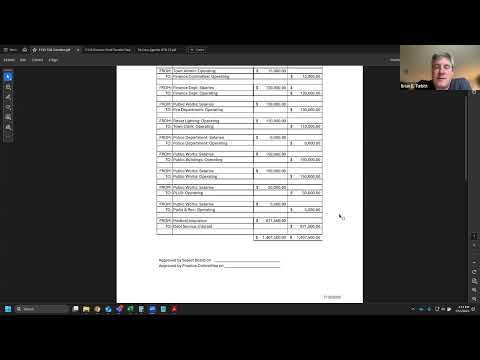
Committee members voted to approve $1,407,500 in general-fund transfers and $1,167,000 in enterprise-fund transfers presented by town finance staff, and later approved $270,000 in reserve-fund transfers, the committee-recorded votes show.
The transfers matter because, under Massachusetts law, the town can move unexpended amounts between budget lines at fiscal year-end but must secure approval from both the select board and the finance committee. As finance staff noted, the select board approved these moves earlier the same day.
Town finance staff member Brian, who presented the package, described the largest general fund adjustments. “We’re proposing transferring from town admin $15,000 to the finance committee operating,” he said, and listed other reallocations, including $120,000 moved from finance department salaries to operating for OpenGov costs tied to asset-management functions. Brian said the finance department “paid for the first year of the asset management software” and that OpenGov was used for water- and sewer-asset management in the first year.
Brian attributed a $130,000 transfer from public works salaries into the fire department operating account to costs for new firefighters attending the academy, including housing and gear. “This is primarily related to the increased number of, new firefighters that we sent to the academy,” he said. Committee members pressed staff on whether recruits sign a service commitment; Brian said a firefighter commitment would have to be negotiated and that the fire department did not currently have the same requirement as the police.
Other notable transfers included amounts to cover higher-than-expected custodial-contract costs for municipal buildings, additional costs tied to special and annual town meetings, and unspent salary lines in public works that staff asked to move to operating accounts to cover procurement cost increases and additional tree work. Brian described $671,000 in a line labeled medical insurance as reflecting a combination of factors tied to budget assumptions and short-term borrowing interest movements.
In the enterprise funds, staff said $211,000 was moved to two airport capital projects — an ARFF truck and runway 6-24 — after borrowing authorizations were inadvertently removed from the annual-town-meeting articles and final bills needed payment. Brian said stormwater and nursing-home (noted in the transcript as “OAH”) lines were adjusted because of comp-and-class impacts and multiple open registered-nurse positions; the town has been using travel nurses while struggling to recruit permanent staff.
On travel nurses, Brian said the town is charged about $3,800 a week plus housing per travel nurse, and that cost is “about $200,000 a year roughly or or more” per travel nurse, which he said was materially higher than hiring permanent staff.
After discussion, a motion to accept the transfers passed by roll-call vote. The committee then considered reserve-fund uses. Brian explained the reserve fund is funded at annual town meeting and may be used only “to cover unanticipated increases in cost or unanticipated expenditures on an emergent basis” under Chapter 40, Section 6 of Massachusetts law, which he cited.
The finance committee approved $270,000 from the reserve fund: $120,000 for general legal costs and $150,000 to support employee housing needs the town had to secure during the year, Brian said. He described the $150,000 as a gross-up after securing additional rental units for employees and transient staff; the expense includes employee contributions and reflects unanticipated housing procurement activity.
What’s next: staff will send the signature documents to the committee chair to complete the record, and the transfers themselves will appear in the town’s final fiscal-year accounting. Committee members asked staff to continue providing hiring and cost-to-hire details for future budget planning.