Get Full Government Meeting Transcripts, Videos, & Alerts Forever!
Get email alerts on the Behavioral Health Detox Funding topic
No spam. Unsubscribe anytime.
Community and Family Resources asks Story County for $9,000 to keep detox beds available
Summary
Community and Family Resources (CFR) asked the Story County Board of Supervisors to authorize development of a county contract—potentially funded with opioid settlement dollars—to cover $9,000 in unfunded detox (3.7) services last year so the agency can continue medically monitored withdrawal management for residents who lack other funding.
Community and Family Resources asked the Story County Board of Supervisors on July 15 to authorize staff to draft a county contract that would let CFR draw up to $9,000 from county opioid-settlement-eligible funds to support its medically monitored intensive residential withdrawal-management program (3.7) for unfunded Story County residents.
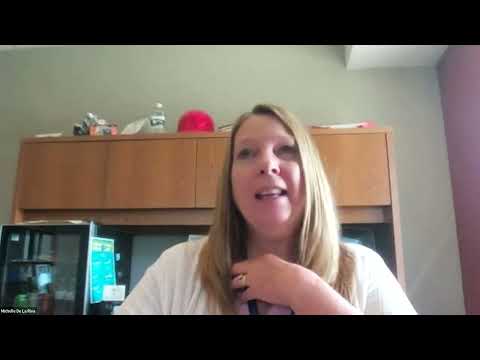
CFR representative Michelle de la Riva told the supervisors that last year seven Story County residents used CFR’s 3.7 detox program while unfunded for a total of 20 service days and that the agency’s cost-per-unit is $450, producing a $9,000 shortfall the agency previously covered under an integrated provider network contract that has not been renewed under the state’s new ASO model.
The request, de la Riva said, is not to pay per individual but to underwrite the withdrawal-management program overall so the agency can continue to admit people who lack Medicaid or private insurance. “What this means for citizens in Story County is that those who are coming in for our 3.7 … if they do not have funding they would not be able to come in for treatment services, as there would be no funding available for them,” she said.
Supervisor Linda Merkin asked what would happen if counties do not provide support; de la Riva replied that hospitals are stabilizing people but typically do not perform the evaluation and warm handoffs into ongoing treatment that CFR’s withdrawal-management program provides. “If they get stabilized [at] the hospital and just go out, there’s no referral or evaluation,” she said.
County staff and the board discussed using opioid settlement funds. Assistant county staff member Lisa Markley confirmed Story County has opioid funds that meet the approved-use criteria the agency cited. Board members requested that any county contract be structured as a not-to-exceed agreement with documentation and invoicing so the county can account for expenditures in annual opioid reports; de la Riva said CFR would provide end-of-year reports showing Story County clients served and drawdown amounts.
The board voted to approve a motion directing staff to work with CFR on a draft contract to be reviewed by the assistant auditor and the county attorney and returned for a future agenda. The vote was recorded as unanimous: Merkin, aye; Edens, aye.
Why it matters: county support would directly pay for continuing a community detox program that the state no longer funds under the new behavioral health alignment, potentially changing where unfunded residents seek withdrawal management and how local hospitals and emergency departments are used.
Details and limits: de la Riva said she believes Iowa Department of Human Services/Iowa Health and Human Services removed 3.7 from state-funded B3 services in the new ASO model, but she did not identify a specific statutory citation. The transcript shows CFR’s ask is for a contract to support services overall up to $9,000 based on last year’s utilization, with CFR proposing to return in January with a utilization report for the counties that participate.
The board did not commit dollars on July 15; they directed staff to prepare and review a draft contract for a future meeting.