Get Full Government Meeting Transcripts, Videos, & Alerts Forever!
Get email alerts on the Housing Tax Incentives topic
No spam. Unsubscribe anytime.
County commissioners reject full tax-exemption request for Northridge apartments, authorize negotiations
Summary
After hours of public comment and technical presentations, the Grand Forks County Commission voted to deny a requested 100% property-tax pilot for the Northridge apartment project but instructed staff to negotiate a reduced, time-limited agreement with the developer.
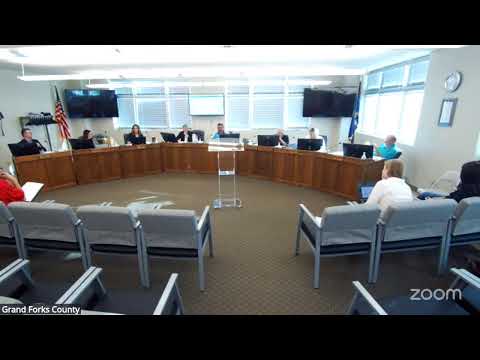
The Grand Forks County Commission voted July 15 to reject a developer’s request for a full (100%) property-tax pilot for the proposed Northridge apartment project but authorized county staff to negotiate alternative terms with the applicant.
The decision follows more than two hours of public comment and a financial presentation from an independent consultant hired by the city. The item drew repeated objections from existing local landlords and residents who said the pilot would give a new, tax‑subsidized project an unfair competitive edge.
Why it matters: The county’s response affects a pending city application that seeks local taxing‑entity approval for a property‑tax pilot. If approved unchanged by the city, the county would be required to decide whether to participate in a multi‑jurisdiction tax agreement that residents and some commissioners said could reduce county revenue for years and disadvantage existing businesses.
Public concerns and developer analysis
Local business owner Sandra Krausnick told the commission the Northridge pilot ‘‘is a violation of the North Dakota Century code 40 dash 57.1’’ because it ‘‘provides for unfair competition with existing businesses’’ and could harm current apartment and amenity providers. Several other residents reiterated that theme, saying the city used developer‑paid data to justify a housing shortage and that other vacancy datasets show higher vacancy rates.
Mikaela Hewitt, of Baker Tilly (the city’s financial advisory firm), summarized the firm’s review of the developer’s financial materials and the city‑commissioned report. She said the project is roughly a $37 million development, financed about 70% by debt and 30% by equity, and that the developer initially sought a 20‑year full tax exemption. ‘‘Following our review . . . without the property tax incentive or without a property tax incentive, the project as proposed would not proceed,’’ Hewitt told the commission, adding the advisory recommended a reduced term (roughly 15 years, blended assistance) to balance lender underwriting and investor return assumptions.
Residents and small landlords pushed back. Several said the city relied on a developer‑paid market memo showing a 1.3% vacancy rate for a limited sample of units, while the Greater Grand Forks Apartment Association’s data shows vacancy percentages in the 3–6% range depending on quarter and sample. Speakers noted other planned projects that together would add roughly 1,100 units to the market if all proceed and questioned whether the public subsidy was necessary or fair.
Commission debate and motion
During discussion commissioners expressed competing priorities: some called for a hard denial of the current 100% exemption request; others said the county should negotiate lower levels or a stepped schedule of participation so the county would still receive some tax revenue during initial years.
A motion to deny the 100% exemption was made on the record. The board later approved a motion to formally reject the current 100% request while directing county staff to enter negotiations with the city and developer over alternative terms and to submit the county’s written response within the statutory 30‑day window. The commission also designated county staff to participate in negotiations with the applicant and city representatives.
What the consultant and city said
Hewitt and other city representatives said the exemption had been requested to secure financing under current market conditions; the advisory’s analysis said the requested assistance increased the project’s projected cash flow enough for debt coverage covenants. Hewitt also explained components of the developer’s operating pro forma such as management and amenity fees (which appear large when a property‑tax exemption is applied in pro forma expense totals).
What remains unresolved
The commission did not set a final negotiated dollar amount or a new term in public session. Commissioners asked staff to seek a compromise that preserves some county revenue during early years (several members suggested stepped reductions rather than a full exemption). Legal questions about the scope of North Dakota Century Code chapter 40‑57 and whether ‘‘payments in lieu’’ differ from property‑tax exemptions were discussed publicly but the board did not adopt a legal opinion at the meeting.
The city council and school board were scheduled to consider the same application at separate public hearings; the county’s formal written response will be sent to the city within the statutory timeline.
Ending
County staff will return to the commission with negotiation updates as required by state procedure; the commission’s action closed the door on the developer’s original request for a 100% exemption while keeping a negotiated agreement possible.