Get Full Government Meeting Transcripts, Videos, & Alerts Forever!
Get email alerts on the Charter Review topic
No spam. Unsubscribe anytime.
Town Council agrees to bring charter-review commission question to September vote
Summary
Councilors debated whether to convene a Charter Review Commission to examine the town charter. After extended discussion — including concerns about process, FOIA complaints from a past commission and the statutory timetable — councilors agreed to place the question on the September agenda for a formal vote.
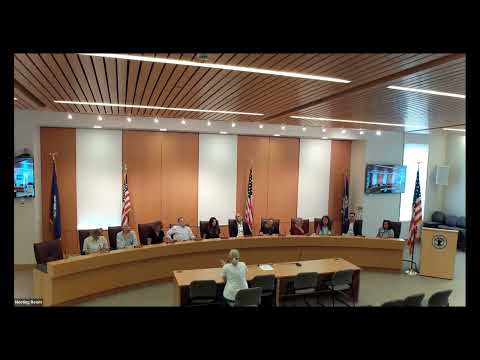
New Canaan, Conn. — After a lengthy public discussion on July 16, the Town Council decided to put the question of whether to convene a Charter Review Commission on the September meeting agenda for a formal vote. The council’s conversation ranged from a procedural obligation to consider charter review every 10 years to concerns about past commission processes, public involvement and the need to define the commission’s charge and membership in advance. Why it matters: The town charter governs municipal structure and powers. A charter-review commission can propose changes that, if approved by the council, may go to public referendum. Council members emphasized the scope and potential consequences of opening the charter and urged careful design and FOIA-compliant procedures. Council member Penny Young, who has participated in prior charter reviews, urged that the town examine its governing document periodically: “When the Charter Revision Commission rewrote and updated the Charter, they put into it that the Charter, ideally, would be looked at every 10 years,” she said. Young described the commission’s work as a structured set of interviews with department heads, boards and commissions to identify operational and statutory issues. Some council members said they had not heard public input and wanted more community outreach before constituting a commission; Kim Norton said she had “no idea how the public feels about this.” Others argued that periodic review is a normal part of good governance and that a commission would gather the necessary input publicly. Councilors also discussed logistics and statutory limits. As Penny Young noted, the state statute lays out membership and conflict-of-interest constraints (for example, typical membership sizes listed by staff in the meeting were five to 15 members; “no more than a third” of appointees may hold other public offices). Several council members stressed the need for clear commission parameters and FOIA-compliant interview processes because previous Charter Revision Commission work prompted complaints and legal review. Outcome and next steps: The council did not constitute a commission on July 16. Instead, members agreed to put a formal motion to convene a Charter Review Commission on the September agenda; if the council votes to convene, the commission’s charge, membership and schedule will be drafted and publicly noticed. Councilors were asked to consider potential appointees and to review the relevant statutes and town charter in advance. Caveats: Several councilors insisted that a charter review is not automatic policy change — the commission’s recommendations would return to the council for approval and any recommended charter amendments may require voter approval. Comments in the meeting noted that board of education matters are largely governed by state law and may be limited in charter scope.