Get Full Government Meeting Transcripts, Videos, & Alerts Forever!
Get email alerts on the Leaf Blowers topic
No spam. Unsubscribe anytime.
New Canaan council directs work on leaf-blower limits, asks bylaws committee to draft short-term options
Summary
After extensive public comment and council debate, the New Canaan Town Council agreed to pursue parallel paths: have the Bylaws & Ordinances committee draft near-term noise-focused restrictions and prepare for a broader task force to study environmental, health and implementation issues.
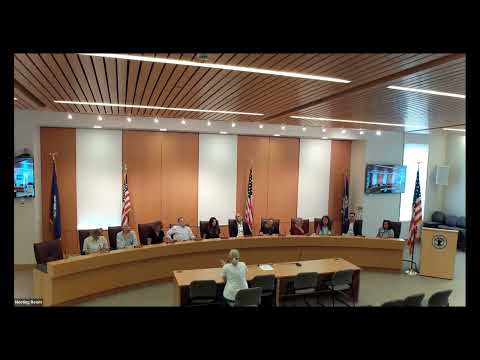
New Canaan, Conn. — The Town Council on July 16 agreed to move forward on addressing complaints about gas-powered leaf blowers by asking the Bylaws & Ordinances committee to draft near-term, noise-focused options while preparing a longer study process. Public commenters framed the issue around noise and health, and council members said the town needs both a fast, enforceable response and a broader study of environmental impacts and implementation. The council did not adopt an ordinance at the meeting; instead councilors outlined a two-track approach and assigned drafting responsibility to the Bylaws & Ordinances committee. Why it matters: dozens of residents told the council that repeated blower use limits their ability to use outdoor space and that the noise is worst in summer. Council members said implementation and enforcement are central concerns and that any restriction should provide time for landscapers and homeowners to adapt. The meeting’s public-comment period featured multiple speakers who urged action. John Seal, a resident, told the council the issue had affected him for years: “We have a right to peaceful, safe, and healthy enjoyment of our property,” he said. Tom Herman, who identified himself as CTO of Ecoclaim, advised against an immediate ban and urged incentives for electrification: “We don’t have to ban. We don’t have to restrict. We can just give people incentives.” Council members broadly agreed that the central short-term problem is noise and that a simple incremental change could address many complaints. Several members said the Bylaws & Ordinances committee should draft specific choices — for example, seasonal hour limits, acreage exemptions or buffers between properties — and bring concrete options back to the full council and to a public hearing. Hillary Orman, co-chair of Bylaws & Ordinances, volunteered to begin drafting a first-round ordinance for the committee to consider. “I will start trying to pull something together, looking at our neighboring towns and what they’re doing,” she said. Councilors said any short-term ordinance would include a reasonable phase-in period to allow landscapers and residents to adapt. At the same time some councilors urged the creation of a separate task force to examine environmental and health impacts, financing and enforcement mechanisms and to engage stakeholders (residents, landscaping businesses, health experts and town staff). Council members described the two tracks as complementary: Bylaws & Ordinances would pursue immediate, enforceable noise-focused rules while the task force would deliver a more comprehensive recommendation for later action. Councilors discussed practical constraints: scheduling Bylaws & Ordinances meetings is difficult because the committee has many members, and an open task force would need clear charge, a timeline and education on public-meeting and FOIA obligations. Kim Norton urged a fixed timeline and suggested budgeting for an expert survey: “To get real data, it takes, you know, a survey expert,” she said. Next steps: Bylaws & Ordinances will meet to draft near-term ordinance options for public hearing; Orman said she would draft initial language. The council asked staff and committee chairs to prepare a proposed charge, membership and timeline for a task force for discussion in coming weeks and September meetings. No ordinance was adopted at the July 16 meeting. Community context and caveats: speakers and councilors repeatedly framed the problem as multifaceted — noise, health/emissions and fair treatment of landscapers. Councilors emphasized they will not finalize enforcement mechanisms without stakeholder input. The council repeatedly cautioned that any short-term change will require a public education period and a phase-in so businesses and residents can adapt.