Get Full Government Meeting Transcripts, Videos, & Alerts Forever!
Get email alerts on the Rezoning Midwest Young Artists topic
No spam. Unsubscribe anytime.
Highwood council approves rezoning for Midwest Young Artists venue amid resident objections, 4-2
Summary
The Highwood City Council voted 4-2 to approve a rezoning request that allows a proposed concert and education facility for Midwest Young Artists, after hours of public comment about traffic, property damage, financing and historic preservation.
The Highwood City Council voted 4-2 to approve a rezoning request that will allow a proposed concert and education facility affiliated with Midwest Young Artists on a parcel adjacent to the Fort Sheridan historic subdivision.
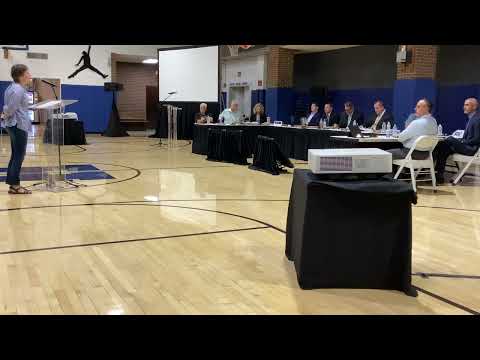
The vote followed nearly three hours of public comment and a line of speakers who said the project would harm neighborhood character, reduce nearby home values, increase traffic and risk damage to historic homes. Supporters said the facility would expand arts opportunities for children and bring cultural recognition to Highwood.
Why it matters: The parcel is currently designated residential in parts of the city’s zoning map and sits beside Fort Sheridan, a historic district where residents told the council they bought homes because of the area’s residential character. The council’s decision allows the petitioner to pursue development plans that supporters say would create a regional youth orchestra center; opponents say the change will permanently alter a quiet neighborhood and poses safety and financial risks for adjacent homeowners.
Residents raised a range of concerns during public comment. Holly Medina, who said she has lived in Fort Sheridan for many years, told the council the neighborhood’s zoning “reflects the character of our community” and asked members to “vote no on this rezoning request,” citing prior sewer work that she said already damaged her home’s foundation and the risk that excavation would worsen settling or vibration-related damage to historic houses.
Several neighbors described retaining-wall damage, close lot lines and the prospect that construction and new parking areas would further undermine existing foundations. Joel Garber and Jennifer Garber, who said their properties back to the parcel in question, described a shared 3-foot stone retaining wall they said had previously been damaged during site work and expressed worry that berms or grading proposed as screening could place new loads on that structure.
Opponents also raised economic objections. One speaker said the petitioner is a nonprofit and “pays no taxes,” and warned that rezoning would remove land from the tax rolls and depress nearby home values. Multiple commenters pointed to city code and procedure: attorney Adam Kinsley, representing the Friends of Historic Fort Charity, argued that a frontage protest filed under section 11-3-8 of city code requires a higher vote threshold and that the zoning discussion was premature because the petitioner has not yet secured financing. Kinsley said the petitioner “has raised $0” toward a capital campaign and called the current deliberation speculative.
Supporters framed the project as a community asset. Mike Nixon, a 20-year resident, called the organization “a world-class organization” and said the proposed venue would be “good for Highwood, and more importantly, is great for our children.” Other supporters urged continued negotiation on conditions and community access.
Council discussion hit familiar topics: how many concerts would be held (the petitioner said the proposal includes roughly three larger concerts per month, about 36 annually, some on Saturdays or Sundays), emergency access and life-safety review, stormwater retention and the choice of surface materials for parking (residents and at least one councilmember discussed permeable pavers versus grass pavers). City staff said Highland Park and city public-safety agencies had reviewed the proposal and offered no formal objections but would review final plans during permit review.
A motion to table the matter to a later meeting (cited by a councilmember as an August 19 date) failed for lack of a second. The council then took the rezoning motion and approved it by a 4-2 margin; no mover/second were named in the public roll call portion of the transcript. The council’s recorded roll call included Councilmember Slavin (voted yes), Councilmember Hanson (aye), Councilmember Fiore (aye) and Councilmember Peterson (nay); the final tally announced by the chair was 4 yes to 2 no.
The approval carries a set of conditions discussed in council questions: the petitioner must show emergency access plans for police and fire review at the building permit stage; the city engineer and staff will review stormwater and surface material plans; and staff indicated specific construction-phase protections and permit reviews would be required before ground disturbance begins.
What’s next: With rezoning approved, the petitioner may pursue detailed design and building permits. Council members and residents said many technical issues — traffic management, grading and retaining-wall protections, stormwater retention, and how the nonprofit will guarantee long-term maintenance — will be resolved or tested in later permit reviews. The planning and zoning commission’s earlier recommendation to deny the request remained part of the record and several residents said they may pursue legal review of the frontage protest and other procedural matters.
Votes at a glance: The council approved the rezoning 4-2. Named recorded votes in the transcript include Slavin (yes), Hanson (aye), Fiore (aye) and Peterson (nay); the chair announced the final result as 4–2. A prior motion to table the matter to August 19 failed for lack of a second.